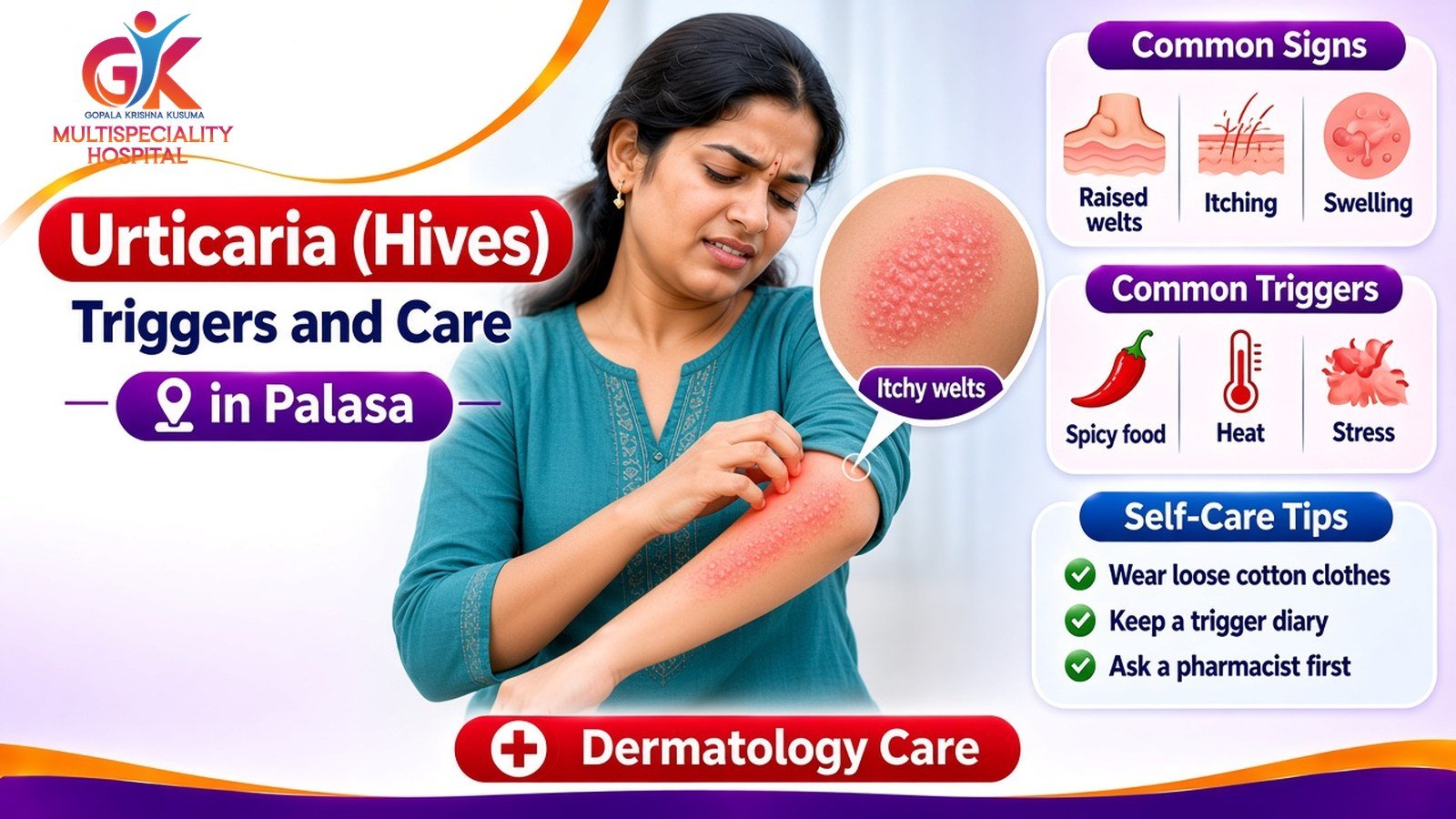
Urticaria Hives Triggers and Care in Palasa
Urticaria (hives) in Palasa: triggers, home care and when swelling is an emergency
Quick answer: Urticaria, commonly called hives, is a skin reaction that causes itchy raised bumps or patches that can appear suddenly anywhere on the body. Most short-lived hives improve within a few days and can often be managed with advice from a pharmacist about antihistamine treatment. Spicy meals, heat, stress, infections and weather changes can act as triggers for some people. Hives are not contagious. Swelling of the lips, tongue or throat, or trouble breathing, needs emergency care — call 108 or 112 straight away.
Around the colder months in Palasa and Kasibugga, families share rich and spicy spicy foods, spend long evenings in warm kitchens, and feel the rush of shopping and guests. Sudden weather shifts after the monsoon can also stress the skin. For some people these changes bring crops of itchy welts known as hives. This guide explains what urticaria is, common triggers, simple care, and the warning signs that mean you should seek urgent help.
What are hives and urticaria?
The NHS (UK National Health Service) hives page explains that the main symptom of hives is an itchy rash. The rash can be raised bumps or patches in many shapes and sizes, appear anywhere on the body, affect one area or spread, and feel itchy, sting or burn. On white skin the rash often looks pink or red; on brown and black skin the colour can be harder to see.
The American Academy of Dermatology (AAD) hives overview states that hives are a skin reaction that causes bumps, raised patches, or both to suddenly appear, and that these often itch intensely. Urticaria is the medical word for hives. Most cases are temporary and go away without treatment. AAD notes that hives are not contagious — you cannot catch hives from another person.
Some people also develop swelling deeper in the skin, called angioedema. AAD explains that angioedema refers to this deeper swelling. The NHS advises urgent care if there is swelling under the skin along with hives, and emergency care if lips, mouth, throat or tongue suddenly swell or breathing becomes difficult.
How long do hives usually last?
According to AAD, an individual hive tends to go away within 24 hours, but new hives can appear. For most people, a case of hives lasts a few days to a few weeks. If hives continue for 6 weeks or longer, that is called chronic hives, and a dermatologist can help plan treatment. The NHS says hives rashes usually get better within a few days and you can often treat hives yourself.
Common triggers around festival season
The NHS explains that you get hives when something causes high levels of histamine and other chemicals to be released in the skin. That trigger can include:
- eating certain foods
- contact with certain plants, animals, chemicals and latex
- cold, such as cold water or wind
- hot, sweaty skin from exercise, emotional stress or eating spicy food
- a reaction to a medicine, insect bite or sting
- scratching or pressing on the skin, such as itchy or tight clothing
- an infection
- a problem with the immune system
- water or sunlight (rare)
AAD adds that allergies (for example to food, insect bites or medication), infections such as a common cold or strep throat, and physical factors such as sunlight, pressure or cold can all play a role. Many people never find an exact cause; AAD calls those spontaneous hives, and notes they can still be treated.
In Palasa during the colder months, spicy festival dishes, heat from cooking, emotional stress, new soaps or fabrics, and cooler night air after warm days are practical things to notice in a symptom diary. Do not assume every itch is hives — other rashes such as eczema or scabies need different care. See our guides on winter dry skin and eczema care and scabies symptoms, treatment and prevention if those patterns sound more familiar.
Home care while you wait for the rash to settle
The NHS says a pharmacist can give advice about antihistamine treatment to help a hives rash. Tell the pharmacist if you have a long-term condition, because you might not be able to take antihistamines, and this treatment might not be suitable for young children. Do not invent doses from the internet — follow the pharmacist or doctor's advice for your age and health.
Helpful general steps include:
- avoid known food, medicine or contact triggers once you have identified them
- wear loose cotton clothing instead of tight or scratchy fabrics
- keep cool; overheating and spicy meals can flare some people's hives
- avoid scratching as much as possible; cool compresses may soothe itching
- note new medicines, foods or infections in the days before a flare
AAD stresses that most short cases are harmless and go away on their own, but treatment can still bring comfort while they settle.
Treatment a doctor may offer
The NHS says a GP might prescribe menthol cream, antihistamines or steroid tablets. If hives do not go away with treatment, you may be referred to a skin specialist (dermatologist). AAD notes that hives cannot be cured, but the condition is treatable, and that a dermatologist can develop a plan when hives last longer than 6 weeks.
Never start steroid tablets or strong creams on your own. Brand-name products are not listed here; a doctor or pharmacist will choose a suitable generic antihistamine class and dose for you if it is appropriate.
When hives are an emergency
Call 108 or 112 immediately if you or someone with you has:
- sudden swelling of the lips, mouth, throat or tongue
- very fast breathing, wheezing, or a feeling of choking or gasping
- a tight throat or trouble swallowing
- skin, tongue or lips turning blue, grey or pale (on darker skin this may be clearer on the palms or soles)
- sudden confusion, drowsiness, dizziness, or fainting
- in a child: limpness, floppiness or not responding as usual
These warning signs follow NHS emergency guidance for a serious allergic reaction. AAD likewise advises urgent care for swelling on the face, inside the mouth or throat, problems swallowing or breathing, feeling light-headed or faint, or a racing heart. Do not wait to see if hives "settle" when breathing or swallowing is affected.
When to see a doctor soon but not as an emergency
The NHS advises asking for an urgent GP appointment or equivalent help if:
- symptoms of hives do not improve after 2 days
- you are worried about a child's hives
- the rash is spreading
- hives keep coming back
- you also have a high temperature and feel unwell
- you also have swelling under the skin (possible angioedema)
For ongoing skin problems, our dermatology department page lists skin services available at the hospital.
Can you prevent every flare?
The NHS says you cannot always prevent hives. Trying to find and avoid your own triggers may help. AAD notes that if pollen or animal contact has triggered hives before, bathing and changing clothes after exposure may help. Keeping a simple note of foods, medicines, infections and weather around each flare can guide a doctor even when no single cause is found.
Hives on brown and black skin
Both the NHS and AAD note that hives can be harder to see on brown and black skin because the colour change may be subtle. Feel for raised, itchy bumps or patches, and compare the area with nearby skin. Take a clear photo in daylight to show a doctor if the rash comes and goes before the appointment. Darker skin does not make emergency warning signs less important — swelling of the lips or throat and breathing trouble still need 108 or 112.
Angioedema without a dramatic rash
AAD explains that some people develop deeper swelling (angioedema) with hives or on its own. Swelling elsewhere on the body is usually less dangerous than swelling of the face, mouth or throat, but it can move to a new area. Any time swelling develops on the face or inside the mouth or throat, get immediate medical care. If swelling keeps returning, dermatology treatment for hives may help prevent further episodes.
Frequently asked questions
Are hives contagious?
No. AAD states clearly that you cannot catch hives. Sometimes hives appear during an infection such as a cold; the infection may spread between people, but the hive rash itself is not passed by touch.
Can spicy food cause hives?
Possibly in some people. The NHS lists eating certain foods and hot, sweaty skin from emotional stress or eating spicy food among triggers. Not everyone who eats spicy food will get hives. If the same dish repeatedly precedes a rash, mention it to a doctor or pharmacist and avoid that trigger while you seek advice.
What should I do if my lips or tongue swell?
Treat it as an emergency. Call 108 or 112. NHS and AAD both warn that swelling of the lips, mouth or throat, or trouble breathing, can be a serious allergic reaction and needs immediate hospital care.
Do I need blood tests for ordinary hives?
Often not for a short, typical episode. Many acute hives settle with simple care. If hives last beyond a few weeks, keep returning, or come with other concerning symptoms, a doctor may arrange further assessment. Follow medical advice rather than requesting tests on your own.
Can children take antihistamines for hives?
Sometimes, but not always. The NHS notes that antihistamine treatment from a pharmacist might not be suitable for young children, and that you should tell the pharmacist about long-term conditions. Always ask a pharmacist or doctor for age-appropriate advice; do not give adult doses to children.
Contact the hospital
For a dermatology consultation at Gopala Krishna Kusuma Multispeciality Hospital, 3B, 5c 431/3A, Jayaramachandrapuram road, Kasibugga, Padmanabhapuram colony, Shivaji Nagar, Palasa, Andhra Pradesh 532222, call +91 79008 08790, or visit our contact page for directions and other ways to reach us. In an emergency, call 108 or 112.
Hours: OPD Monday to Saturday, 9 AM to 9 PM; emergency services 24 hours.
Disclaimer: This article is for general information only and is not a substitute for professional medical advice, diagnosis or treatment. Please consult a qualified doctor about your own health.
Image credit: Branded educational infographic created for this article (AI-assisted illustrative visual). It does not show the hospital's patients, staff or premises.