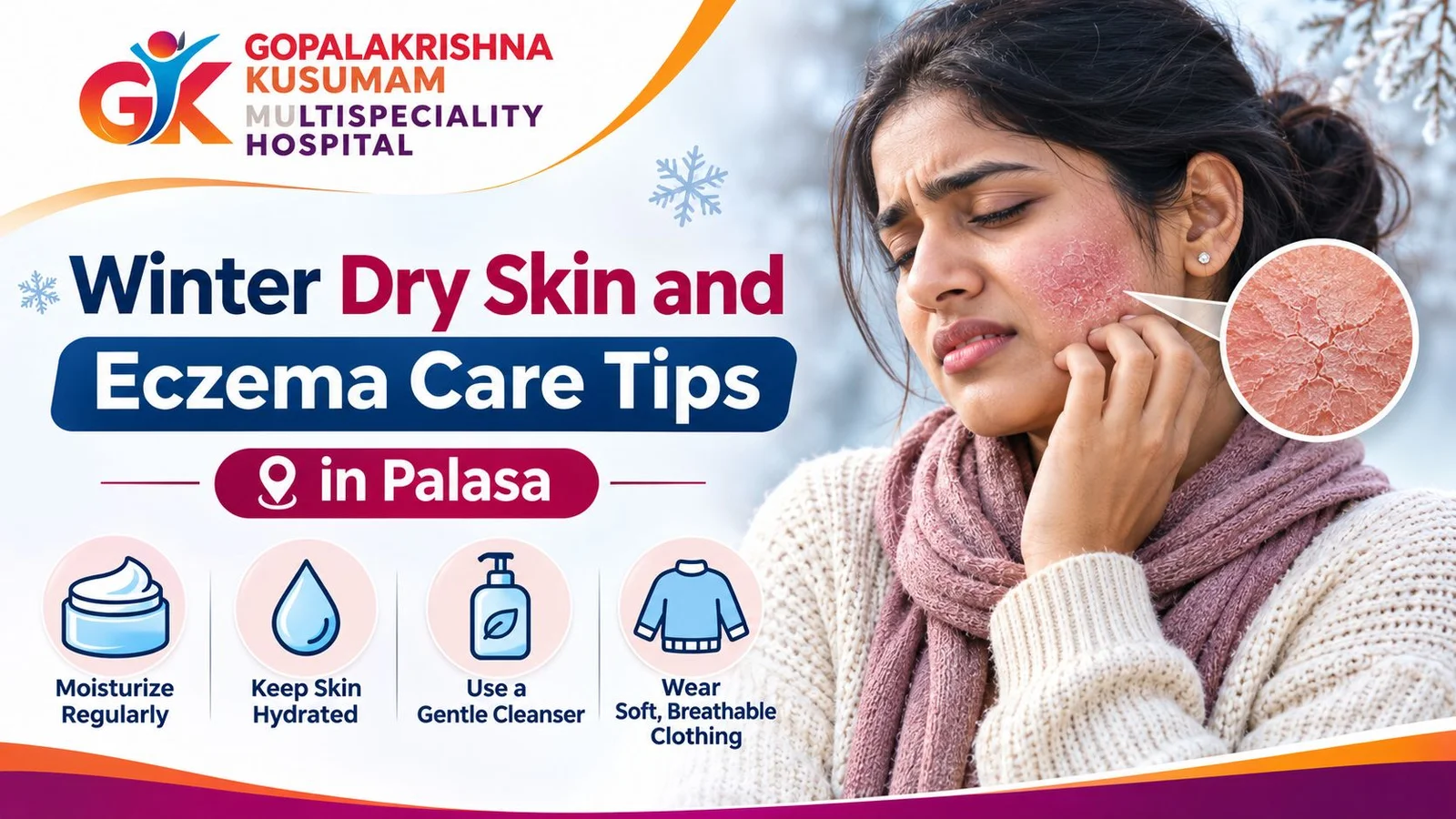
Winter Dry Skin and Eczema Care Tips in Palasa
Winter dry skin and eczema: care tips and warning signs
Quick answer: Most winter dry skin improves with short lukewarm baths, a mild soap-free cleanser, and a thick fragrance-free moisturiser applied while the skin is still slightly damp, at least twice a day. See a skin doctor if itching disturbs your sleep, the skin cracks, bleeds, oozes or spreads, or home care does not help within one to two weeks, because it may be eczema, a fungal infection or another condition that needs proper treatment.
As the cooler months arrive in Palasa, Kasibugga and the rest of Srikakulam district, many families notice the same changes: rough patches on the shins, chapped lips, cracked heels, and hands that feel tight after washing. For some people this is mild seasonal dryness. For others, especially children and older adults, it can tip over into itchy, inflamed skin that keeps them awake at night.
This article explains why skin gets dry in winter, how to tell ordinary dryness from eczema, practical care steps that suit local routines, and when it is time to see a dermatologist. It is general information only, and a skin doctor should assess any rash that is persistent, painful or spreading.
Why skin becomes dry in winter
The outermost layer of the skin works like a protective wall, holding water in and keeping irritants out. In winter, cooler and less humid air, especially in the early mornings, draws moisture out of this layer. Many of us also switch to hotter baths in the cold months, and hot water strips away the skin's natural oils. Strong soaps, detergents and frequent hand-washing add to the problem.
The skin on the lower legs, forearms, hands and feet has fewer oil glands, so it is usually the first to become rough, flaky or cracked. Older adults, people with diabetes or thyroid problems, and people who work outdoors or with their hands are more likely to have severe dryness.
Is it dry skin or eczema?
Dry skin (xerosis) usually looks rough, flaky or slightly scaly and may itch mildly. It generally improves quickly once you moisturise regularly.
Eczema, also called atopic dermatitis, is a condition in which the skin barrier is weaker and the skin becomes inflamed. The NHS describes atopic eczema as causing skin that is itchy, dry, cracked and sore, often with flare-ups that come and go (NHS: Atopic eczema). Winter is a common trigger for flares.
Signs that point more towards eczema include:
- Itching that is intense, especially at night
- Red, darker or discoloured patches, depending on skin tone
- Patches in skin folds such as the inner elbows, behind the knees, the neck or around the eyes
- Thickened skin from repeated scratching
- Small bumps that may ooze or crust
- A personal or family history of eczema, asthma or hay fever
Other conditions can look similar, including fungal infections, which are common in our warm and humid climate, contact dermatitis from something touching the skin, scabies, and psoriasis. Because the treatments are different, a correct diagnosis matters.
Simple daily care for winter skin
The American Academy of Dermatology suggests a few practical habits to relieve dry skin (AAD: Dermatologists' tips to relieve dry skin). Adapted to local routines, these include:
Keep baths short and lukewarm
A quick bath of five to ten minutes with warm, not hot, water is kinder to the skin than a long hot bath. If you prefer a bucket bath, mix the water so it is comfortably warm rather than steaming.
Use a mild cleanser
Choose a gentle, fragrance-free, soap-free cleanser or a mild soap, and use it mainly where it is needed. Avoid scrubbing with loofahs or rough cloths on dry or itchy skin.
Moisturise within minutes of bathing
Pat the skin dry with a soft towel, leaving it slightly damp, and apply a moisturiser straight away. Thicker creams and ointments generally hold moisture better than thin lotions. Ingredients such as petrolatum, glycerin, ceramides or liquid paraffin are commonly recommended. Reapply at least twice a day and after washing your hands.
Protect your hands
Wear gloves for washing clothes and utensils, and when handling detergents or cleaning products. Apply hand cream after each wash. In Palasa, many people work in cashew processing; the liquid from raw cashew shells is a known skin irritant, so protective gloves and following workplace safety advice are especially important for hands that are cracked or sore.
Care for lips and heels
Use a plain lip balm or a little petroleum jelly on the lips, and avoid licking them. For cracked heels, soak the feet briefly in lukewarm water, pat dry, and apply a thick cream at night with cotton socks on top.
Choose comfortable clothing
Soft cotton next to the skin is usually better tolerated than rough wool. Wash new clothes before wearing them and rinse detergent out thoroughly.
Drink water and eat a balanced diet
Staying hydrated and eating a balanced diet supports overall health, although moisturising the skin directly is what makes the biggest difference to dryness.
Things that can make winter skin worse
- Very hot baths or sitting close to a heater or fire for long periods
- Strongly perfumed soaps, lotions and talcum powders
- Applying undiluted camphor, lime juice, kerosene or other home remedies to cracked or inflamed skin
- Using steroid creams bought over the counter without a prescription, especially on the face or on children; these can cause side effects and may hide a fungal infection
- Scratching; keep nails short and try a cool compress when the itch is bad
Winter skin care for babies, children and older adults
Babies and young children have thinner skin that loses moisture easily. Keep baths short, use a mild baby cleanser, and moisturise the whole body afterwards. If a baby has a red, itchy rash on the cheeks, scalp or body folds that does not settle, consult a doctor.
Older adults often have drier, more fragile skin. Itching in elders can sometimes be linked to other health problems, such as diabetes, kidney or thyroid conditions, or to medicines. Persistent itching without an obvious rash is worth discussing with a doctor.
People with diabetes should check their feet daily during winter. Cracked heels can let in infection, so any crack that becomes red, swollen, painful or starts to discharge needs prompt attention.
When to see a skin doctor
Home care is enough for many people, but you should consult a dermatologist if:
- Itching is disturbing your sleep or daily activities
- Skin is cracking, bleeding, oozing or crusting
- The rash is spreading, or there are round, ring-shaped patches that could be fungal
- Moisturising regularly for one to two weeks has not helped
- A child has a persistent rash, or eczema keeps coming back
- There are signs of infection: increasing pain, warmth, swelling, pus, yellow crusts, or fever
- You have diabetes and notice cracks or sores on your feet
A dermatologist can examine the skin, confirm whether it is dry skin, eczema, a fungal infection or something else, and recommend a treatment plan. Depending on the diagnosis, this may include a suitable moisturiser routine, prescription creams used for a set period, or treatment for infection. Prescription medicines should always be used under a doctor's guidance.
Skin care support in Palasa and Kasibugga
If you live in Palasa, Kasibugga or nearby areas such as Mandasa, Sompeta, Ichchapuram or Tekkali and your winter skin problems are not settling, an examination can help you understand what is going on and how to manage it.
Our Dermatology department sees patients with skin, hair and nail concerns. To plan a visit, book an appointment online.
Frequently asked questions
How often should I apply moisturiser in winter?
Most people benefit from moisturising at least twice a day, including straight after bathing while the skin is still slightly damp, and after washing the hands. People with eczema may need to apply it more often.
Is coconut oil good for dry skin?
Plain coconut oil can help some people with mild dryness, but it does not suit everyone and may irritate inflamed skin. If you have eczema or a rash, ask a dermatologist which product is suitable for you.
Can winter eczema be cured permanently?
Eczema is often a long-term condition that comes and goes. It cannot always be cured, but regular skin care and the right treatment during flares can usually keep it well controlled. A dermatologist can create a plan for you.
Should I use a steroid cream from the pharmacy for itchy skin?
It is safer not to use steroid creams without a prescription. Using the wrong strength, or using them on a fungal infection, can make problems worse. A doctor can advise the right cream and how long to use it.
Why do my heels crack every winter?
The skin on the heels is thick and has few oil glands, so it dries and splits easily in cool, dry weather, especially with open footwear. Regular soaking, a thick moisturiser at night and comfortable footwear help. See a doctor if cracks are deep, painful or infected, or if you have diabetes.
When is itchy skin an emergency?
Seek urgent care for a rapidly spreading painful rash, blistering, swelling of the face, lips or throat, difficulty breathing, or a rash with high fever. These need immediate medical attention.
Contact the hospital
For a dermatology (skin) consultation at Gopala Krishna Kusuma Multispeciality Hospital, 3B, 5c 431/3A, Jayaramachandrapuram road, Kasibugga, Padmanabhapuram colony, Shivaji Nagar, Palasa, Andhra Pradesh 532222, call +91 79008 08790, or visit our contact page for directions and other ways to reach us. In an emergency, call 108 or 112.
Hours: OPD Monday to Saturday, 9 AM to 9 PM; emergency services 24 hours.
Disclaimer: This article is for general information only and is not a substitute for professional medical advice, diagnosis or treatment. Please consult a qualified doctor about your own health.
Image credit: Shixart1985, via Wikimedia Commons, CC BY 2.0; cropped and resized. Representative stock image; it does not show the hospital's patients, staff or premises.