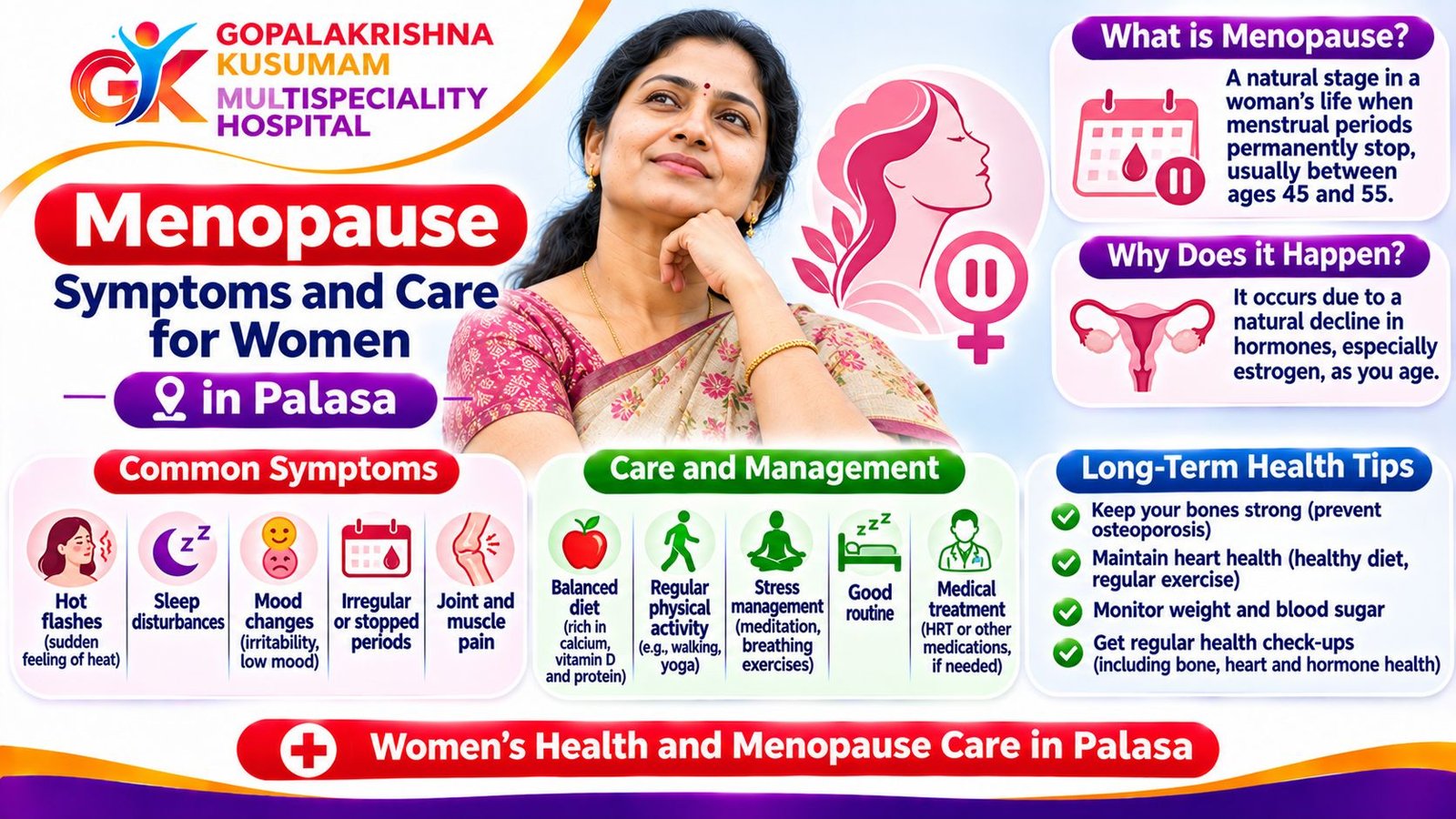
Menopause Symptoms and Care for Women in Palasa
Menopause and perimenopause: symptoms, health changes and when to see a gynaecologist
Quick answer: Menopause is the natural end of monthly periods. According to the WHO, most women reach it between 45 and 55 years of age, and it is confirmed after 12 months in a row without a period. The years before it, called perimenopause, can bring irregular periods, hot flushes, night sweats, poor sleep, mood changes, vaginal dryness and joint aches. Symptoms differ from woman to woman; some have very few, while others find them hard to manage. Hormonal and non-hormonal options can help, so it is worth talking to a doctor. Any vaginal bleeding after 12 months without a period should always be checked.
In many homes in Palasa, Kasibugga and the rest of Srikakulam district, women in their forties and fifties keep running the house, working in fields, shops and offices, and caring for children and elders. Changes such as sudden heat, broken sleep, aches or heavy, irregular periods are often brushed aside as "age" or "weakness". World Menopause Day on 18 October each year is a reminder that these changes are real and that support is available.
This guide explains what menopause and perimenopause are, the common symptoms, longer-term health changes, what you can do day to day, and when to see a gynaecologist.
What is menopause?
The World Health Organization (WHO) explains that menopause marks the end of a woman's reproductive years. It happens because the ovaries stop releasing eggs and the level of the hormone oestrogen in the blood falls.
- Natural menopause is said to have happened after 12 consecutive months without a period, when there is no other cause.
- Usual age: most women experience it between 45 and 55 years. It is not possible to predict exactly when an individual woman will reach it.
- Early or premature menopause: some women reach menopause before 40 years of age.
- Menopause after treatment: it can also follow an operation to remove both ovaries, or treatments such as chemotherapy or radiation therapy.
Women who have had a hysterectomy, or who use some hormonal contraceptives, may already have no periods but can still notice other changes of the menopausal transition.
What is perimenopause?
Perimenopause is the transition before menopause. The WHO describes it as starting when the first changes, usually in the menstrual cycle, are noticed, and ending one year after the final period. It can last several years. The NHS (UK National Health Service) notes that one of the first signs is usually a change in periods: they may come more or less often, and bleeding may get heavier or lighter, until they stop altogether.
Pregnancy is still possible during perimenopause. The WHO recommends contraception until after 12 consecutive months without a period. The NHS advises using contraception for 1 year after the final period if you are 50 or over, and for 2 years if you are 40 to 49. A doctor can help you choose a suitable method for your age and health.
Common symptoms of menopause
The WHO and the NHS list these as common symptoms during and after the menopausal transition:
- Hot flushes and night sweats: a sudden feeling of heat in the face, neck and chest, often with sweating, palpitations or discomfort, lasting several minutes. At night they can soak clothes and bedding.
- Changes in periods: irregular timing and changes in flow, until periods stop.
- Sleep problems: difficulty falling or staying asleep, which can be worse with night sweats.
- Mood and memory changes: mood swings, low mood, anxiety or depression, and problems with memory or concentration, sometimes called brain fog.
- Vaginal and urinary symptoms: dryness, burning, itching, pain during sex, more urinary infections, needing to pass urine more often, or leaking urine.
- Other changes: weight gain around the stomach, headaches, muscle aches and joint pains, palpitations, hair thinning, dry and itchy skin, reduced sex drive and sensitive teeth or gums.
The NHS says symptoms usually last for 7 to 9 years, sometimes longer, and can change over time. For example, hot flushes may ease and be replaced by low mood or joint pain. Many women do not link aches and pains with menopause, which is why this year's World Menopause Day focus on pain at midlife matters.
Longer-term health changes after menopause
According to the WHO, the fall in oestrogen after menopause can also affect long-term health:
- Bones: loss of bone density around menopause is a significant contributor to higher rates of osteoporosis and fractures. Our guide on osteoporosis and bone health after 40 explains the warning signs and prevention steps.
- Heart: women's lower risk of heart disease compared with men gradually disappears after menopause, so blood pressure, sugar and cholesterol checks become more important.
- Pelvic support: the muscles and tissues supporting the pelvic organs can weaken, raising the risk of pelvic organ prolapse, which may feel like a bulge or heaviness in the vagina.
- Infections: the WHO notes that sexually transmitted infections are still possible during and after menopause, and thinning of the vaginal wall can make tears more likely.
Midlife is also a good time to keep up with routine women's health checks. Read more in our guide to cervical cancer screening and the HPV vaccine.
Everyday steps that may help
These general habits may make symptoms easier to manage and support long-term health. Talk to your doctor before making big changes if you have other health conditions:
- Keep a symptom diary: note your periods, bleeding, hot flushes, sleep and mood. This helps the doctor understand your pattern.
- Stay cool: wear light cotton clothes in layers, keep a fan and water nearby, and notice whether spicy food, tea, coffee or stress seem to trigger hot flushes for you.
- Stay active: regular walking, yoga or other activity you enjoy can support mood, sleep, weight and bone strength.
- Eat a balanced diet: include milk or curd, pulses, leafy greens, vegetables and fruit, and limit sugar and fried snacks.
- Avoid tobacco and alcohol, which can harm bones and heart health.
- Look after your mind: talk to family or friends about how you feel, and seek help if low mood or anxiety does not lift.
- Be careful with unproven remedies: some supplements and products are sold with big promises. Ask a doctor or pharmacist before taking them.
Treatment options a doctor may discuss
The WHO notes that a variety of non-hormonal and hormonal treatments can help relieve symptoms, and that symptoms affecting health and well-being should be discussed with a health-care provider, considering a woman's medical history, values and preferences. Depending on your symptoms and health, a gynaecologist may discuss:
- Lifestyle changes and support for sleep and mood.
- Hormone replacement therapy (HRT), whose benefits and risks differ from person to person and should be discussed with your doctor.
- Non-hormonal medicines for certain symptoms such as hot flushes or mood changes.
- Local treatment for vaginal dryness and discomfort.
- Tests such as a blood pressure check, blood sugar, a bone health assessment or other investigations, if needed.
No single treatment suits everyone. Your doctor will explain the possible benefits and side effects of each option so that you can decide together.
When to see a gynaecologist
The NHS suggests contacting a doctor if:
- You think you have symptoms of perimenopause or menopause and want to know your options.
- You have symptoms such as a fast or pounding heartbeat (palpitations).
- You still have periods but are bleeding more, not less, than before.
- You have not had a period for 12 months or more and have any vaginal bleeding, even if it is only spotting, a pink or brown discharge, or happened just once.
Postmenopausal bleeding is not usually serious, but the NHS notes it can be a sign of cancer, and finding the cause early makes treatment easier, so it should always be checked. Also seek advice early if your periods stop before the age of 40, or if mood changes are affecting your daily life. The obstetrics and gynaecology department offers consultations for menopause-related concerns.
Frequently asked questions
At what age does menopause start?
The WHO says most women reach menopause between 45 and 55 years of age. Some women reach it earlier, and menopause before 40 is called premature menopause. Menopause is confirmed after 12 months in a row without a period.
Can I get pregnant during perimenopause?
Yes. Pregnancy is still possible during perimenopause. The NHS advises contraception for 1 year after your final period if you are 50 or over, and for 2 years if you are aged 40 to 49.
How long do hot flushes and other menopause symptoms last?
It varies. The NHS says symptoms usually last for 7 to 9 years, sometimes longer, and they can change over time. Some women have few symptoms, while others find them severe enough to affect daily life.
Is bleeding after menopause normal?
No. If you have not had a period for 12 months or more and then have any vaginal bleeding, even a small amount, see a doctor. It is not usually serious, but it always needs to be checked.
Can menopause cause joint pain?
Yes, it can. The NHS lists muscle aches and joint pains among the symptoms of menopause and perimenopause. Because joint pain has many causes, a doctor can help work out whether it is related to menopause or to another condition.
Contact the hospital
For an obstetrics and gynaecology consultation at Gopala Krishna Kusuma Multispeciality Hospital, 3B, 5c 431/3A, Jayaramachandrapuram road, Kasibugga, Padmanabhapuram colony, Shivaji Nagar, Palasa, Andhra Pradesh 532222, call +91 79008 08790, or visit our contact page for directions and other ways to reach us. In an emergency, call 108 or 112.
Hours: OPD Monday to Saturday, 9 AM to 9 PM; emergency services 24 hours.
Disclaimer: This article is for general information only and is not a substitute for professional medical advice, diagnosis or treatment. Please consult a qualified doctor about your own health.
Image credit: Scientific Animations (www.scientificanimations.com), via Wikimedia Commons, CC BY-SA 4.0; side margins extended with a blurred background and resized; this adapted image is shared under the same licence. Representative image; it does not show the hospital's patients, staff or premises.