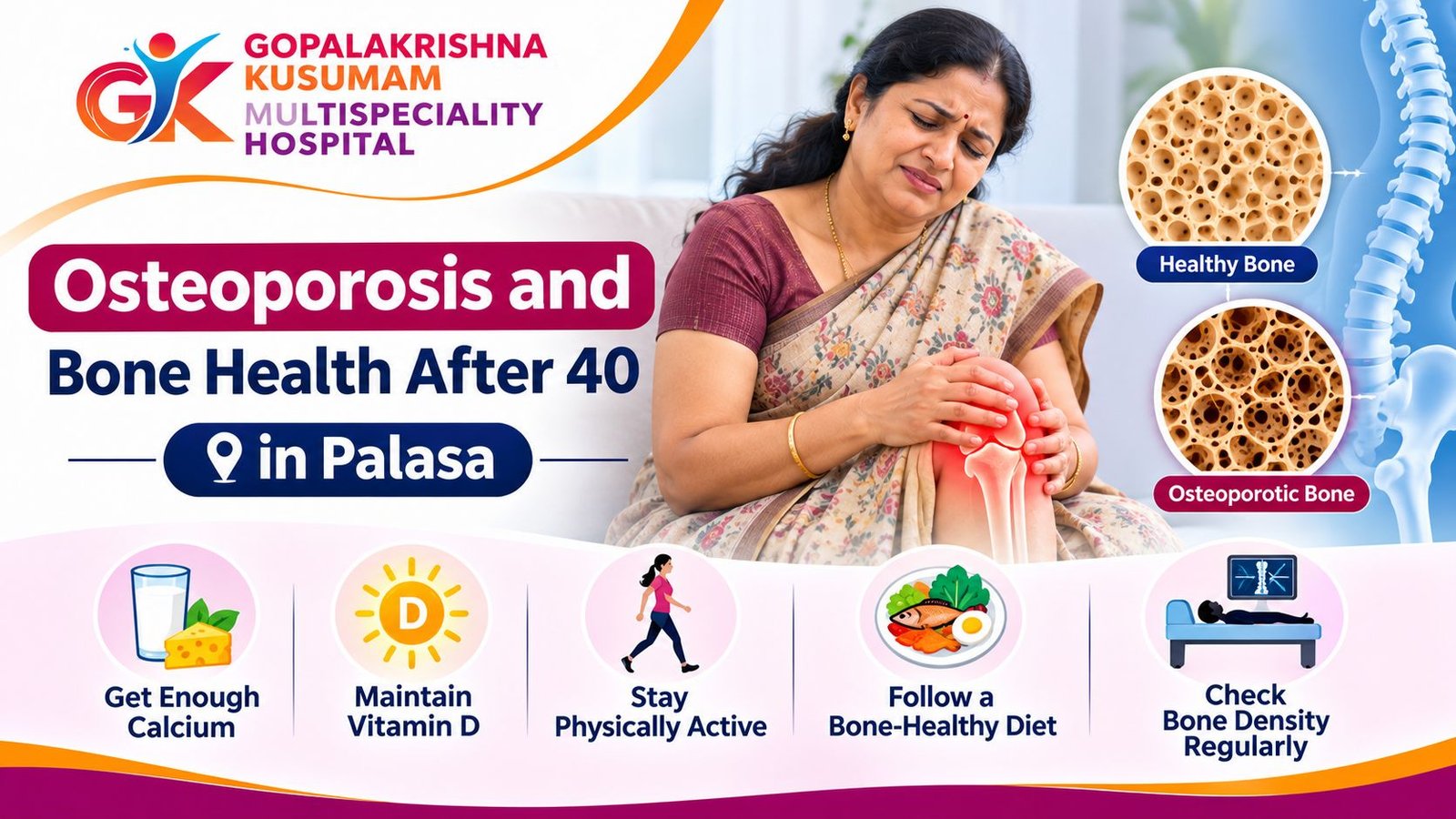
Osteoporosis and Bone Health After 40 in Palasa
Osteoporosis after 40: risks, tests and bone care
Quick answer: Osteoporosis is a condition in which bones slowly lose strength and become fragile, so they can break after a minor fall or even a strong cough. It usually causes no pain or symptoms until a fracture happens, which is why adults over 40, especially women after menopause, should talk to a doctor about their risk. A bone density (DEXA) scan can confirm it, and diet, exercise, fall prevention and, when needed, medicines can help protect your bones.
Many families in Palasa, Kasibugga and the villages of Srikakulam district know someone who broke a wrist or hip after a simple slip at home: an elderly mother who tripped on the doorstep, or a grandfather who fell in the bathroom. Often the fall was small, but the injury was big. In many of these cases, the real problem started years earlier, silently, as the bones gradually became thinner and weaker.
World Osteoporosis Day, marked on 20 October, is a reminder that osteoporosis is a progressive disease that weakens bones and increases the risk of fractures (World Health Organization: World Osteoporosis Day). This guide explains what osteoporosis is, who is at higher risk, how it is diagnosed, and practical steps you can take. It is general information only; please consult an orthopaedic doctor for advice about your own health.
What is osteoporosis?
Bone is living tissue. Throughout life, the body breaks down old bone and builds new bone. In childhood and early adulthood we build more than we lose, and bone mass usually peaks by our late twenties or early thirties. After that, we slowly start to lose bone, and in women this loss speeds up for several years after menopause, when oestrogen levels fall.
When bone loss is faster than normal, or when a person did not build strong bones to begin with, the inside of the bone becomes more porous, like a honeycomb with larger holes. These bones are fragile and can break easily. This is osteoporosis. The NHS describes it as a condition that develops slowly over several years and is often only diagnosed when a fall or sudden impact causes a bone to break (NHS: Osteoporosis).
The stage before osteoporosis, when bone density is lower than average but not low enough to be called osteoporosis, is called osteopenia. Finding bone loss at this stage gives you more time to act.
Why osteoporosis is called a "silent" disease
Osteoporosis itself does not hurt. You cannot feel your bones getting thinner. Most people find out only after a fracture, which is why doctors call it silent. Some signs that may point to weak bones include:
- A fracture after a minor fall from standing height or less, for example a broken wrist after putting your hand out to save yourself.
- Loss of height over the years, or clothes fitting differently because of a stooped posture.
- A gradually rounded upper back (sometimes called a "dowager's hump").
- Sudden back pain, especially after lifting or bending, which can be caused by a small fracture in a spinal bone.
None of these signs proves osteoporosis, and back pain has many other causes. But if you or an elderly family member notice any of them, it is worth asking a doctor about bone health.
Who is at higher risk?
Anyone can develop osteoporosis, but certain factors raise the risk. Knowing them helps you decide when to get checked:
- Being a woman, especially after menopause. Women are at higher risk than men, particularly if menopause begins early (before 45) or the ovaries have been removed.
- Age. The risk rises steadily as we get older, in both women and men.
- Family history. A parent who had osteoporosis or a hip fracture.
- Long-term steroid tablets. Steroids taken for months for conditions like asthma or arthritis can affect bones. Never stop prescribed steroids on your own; talk to your doctor instead.
- Low body weight or very restricted diets. Being underweight, or eating very little calcium and protein, can weaken bones.
- Low vitamin D. Little time outdoors, covering the skin fully, or certain health conditions can lead to low vitamin D, which the body needs to absorb calcium.
- Smoking and heavy alcohol use. Both are linked to weaker bones.
- Some medical conditions. Thyroid and other hormone problems, rheumatoid arthritis, long-standing kidney or liver disease, and conditions that affect absorption of food can all play a part.
- Low physical activity. Long periods of sitting or bed rest lead to bone loss.
If several of these apply to you or a parent, mention them at your next visit to a doctor, even if you feel perfectly well.
How is osteoporosis diagnosed?
Diagnosis starts with a conversation. The doctor will ask about your age, menopause, past fractures, medicines, diet, activity and family history, and examine you, including checking your height and posture.
Bone density (DEXA) scan
The main test is a bone mineral density scan, usually called a DEXA or DXA scan. You lie on a padded table while a scanner arm passes over your hip and lower spine. It uses a very low dose of X-rays, does not usually hurt and typically takes 10 to 20 minutes. The result is reported as a "T-score", which compares your bone density with that of a healthy young adult.
Other tests
Depending on your situation, the doctor may suggest blood tests (for example calcium, vitamin D, thyroid or kidney function) to look for causes of bone loss, and X-rays if a fracture is suspected, such as after sudden back pain. Doctors also use risk calculators such as FRAX, which combine your risk factors and bone density result to estimate your chance of a fracture in the coming years.
Treatment: what are the options?
There is no single treatment that suits everyone. The aim is to slow bone loss, strengthen bones where possible and, most importantly, prevent fractures. A plan may include:
- Calcium and vitamin D. Through food first; supplements only if your doctor advises them, in the dose they recommend.
- Bone-strengthening medicines. Several types of prescription medicines can slow bone loss or help build bone. Whether you need one depends on your age, scan results and overall fracture risk. These medicines need a doctor's prescription and follow-up.
- Exercise and physiotherapy. A safe, regular exercise plan helps both bones and muscles, and improves balance.
- Fall prevention. Simple changes at home can greatly reduce the chance of a fall.
- Treating fractures properly. If a fracture has already happened, it needs correct orthopaedic treatment, followed by a plan to protect the other bones.
Please do not buy calcium or "bone strength" products on your own and take them for years without advice. Too much calcium from supplements is not helpful for everyone, and some people need a different treatment altogether.
Build, protect, strengthen: everyday bone care
Most of what keeps bones healthy happens at home, in the kitchen and in daily routines.
Eat for strong bones
Calcium, protein and vitamin D work together. Good everyday sources of calcium familiar to families in coastal Andhra include:
- Milk, curd and buttermilk.
- Ragi (finger millet), for example ragi java or ragi sangati.
- Sesame seeds (nuvvulu) and dishes made with them.
- Green leafy vegetables such as thotakura (amaranth) and munagaku (drumstick leaves).
- Small fish eaten with bones, for those who eat fish.
- Dals, chana and rajma, which also provide protein.
Get some safe sunlight
Our skin makes vitamin D when exposed to sunlight. Short periods outdoors in the morning or late afternoon, with forearms and face uncovered, can help many people. Those who stay indoors most of the day, older adults and people with darker skin may still have low levels, so ask your doctor whether a vitamin D test is needed.
Keep moving
Weight-bearing exercise, where your feet and legs carry your body weight, helps bones. Brisk walking, climbing stairs carefully, light jogging for those who are fit, dancing and gardening all count. Muscle-strengthening exercises, such as using light weights or resistance bands, help too. Older adults benefit from balance exercises and gentle yoga to reduce falls. If you already have osteoporosis or a past fracture, ask for a physiotherapy plan so that you avoid movements that strain the spine.
Make the home fall-safe
Most fractures in older people happen at home. A few changes help a lot:
- Keep floors dry, especially in bathrooms and near the washing area; use non-slip mats.
- Fix grab bars near the toilet and bathing area.
- Light up passages and steps, including a small night light for trips to the bathroom.
- Remove loose wires, low stools and clutter from walkways.
- Wear well-fitting footwear with good grip rather than worn-out slippers.
- Get eyes checked regularly and review medicines that cause dizziness or drowsiness.
Avoid habits that harm bones
Stop smoking, limit alcohol and avoid crash diets.
Bone health at every stage of life
Osteoporosis is often thought of as an "old age" problem, but bone health starts in childhood. Children and teenagers who eat well and play outdoors build a stronger "bone bank" for later life. Women in their thirties and forties can protect what they have built through diet and activity. Around menopause is an important time to discuss bone health with a doctor. Men, too, lose bone with age and should not assume they are safe.
When should you see an orthopaedic doctor?
Consider booking a consultation if:
- You are a woman past menopause, or anyone over 50 with one or more risk factors listed above.
- You or a parent broke a bone after a minor fall.
- You have lost height, developed a stooped back, or have sudden back pain after bending or lifting.
- You have been on steroid tablets for three months or more.
- You have been told you have osteopenia and want to know how to protect your bones.
Seek emergency care straight away, by calling 108 or 112, if an elderly person falls and cannot stand, has severe hip or groin pain, or a limb looks bent or shortened.
At Gopala Krishna Kusuma Multispeciality Hospital's orthopaedics department in Kasibugga, our doctors can assess your bone health, advise on the tests you need and plan treatment or fracture care where required. If you also have joint pain, our guide on how early diagnosis can help manage orthopaedic conditions explains why timely assessment matters. You can book an appointment online for yourself or an elderly parent.
Frequently asked questions
What is the first sign of osteoporosis?
Often there is no early sign at all. For many people the first sign is a fracture after a minor fall, such as a broken wrist, hip or spinal bone. Loss of height, a stooped back or sudden back pain after lifting can also be clues, so it is worth asking a doctor about bone health if you have risk factors.
At what age should women get a bone density test?
There is no single age that fits everyone. Women past menopause, and anyone over 50 with risk factors such as a previous low-impact fracture, long-term steroid use, low body weight or a family history of hip fracture, should ask their doctor whether a DEXA scan is needed. Your doctor will decide based on your overall risk.
Is a DEXA scan painful or risky?
It does not usually hurt. A DEXA scan usually takes 10 to 20 minutes. You lie still on a padded table while the scanner passes over you. It uses a very low dose of X-rays. Tell the staff if you are or might be pregnant.
Can osteoporosis be cured?
Bone lost to osteoporosis may not fully return to normal, but treatment can slow further loss, improve bone strength in many people and lower the risk of fractures. Medicines where needed, adequate calcium and vitamin D, regular exercise and fall prevention together make a real difference.
Should I take calcium tablets to prevent osteoporosis?
Try to get calcium from food first, such as milk, curd, ragi, sesame and leafy greens. Supplements can help people who cannot get enough from food, but the right dose depends on your diet and health. Take calcium or vitamin D tablets only as advised by your doctor.
Can men get osteoporosis?
Yes. Osteoporosis is more common in women, but men also lose bone as they age. Men who smoke, drink heavily, take long-term steroids or have certain medical conditions are at higher risk and should also discuss bone health with a doctor.
Contact the hospital
For an orthopaedic consultation at Gopala Krishna Kusuma Multispeciality Hospital, 3B, 5c 431/3A, Jayaramachandrapuram road, Kasibugga, Padmanabhapuram colony, Shivaji Nagar, Palasa, Andhra Pradesh 532222, call +91 79008 08790, or visit our contact page for directions and other ways to reach us. In an emergency, call 108 or 112.
Hours: OPD Monday to Saturday, 9 AM to 9 PM; emergency services 24 hours.
Disclaimer: This article is for general information only and is not a substitute for professional medical advice, diagnosis or treatment. Please consult a qualified doctor about your own health.
Image credit: Nick Smith photography, via Wikimedia Commons, CC BY-SA 3.0; cropped and resized. Representative stock image; it does not show the hospital's patients, staff or premises.