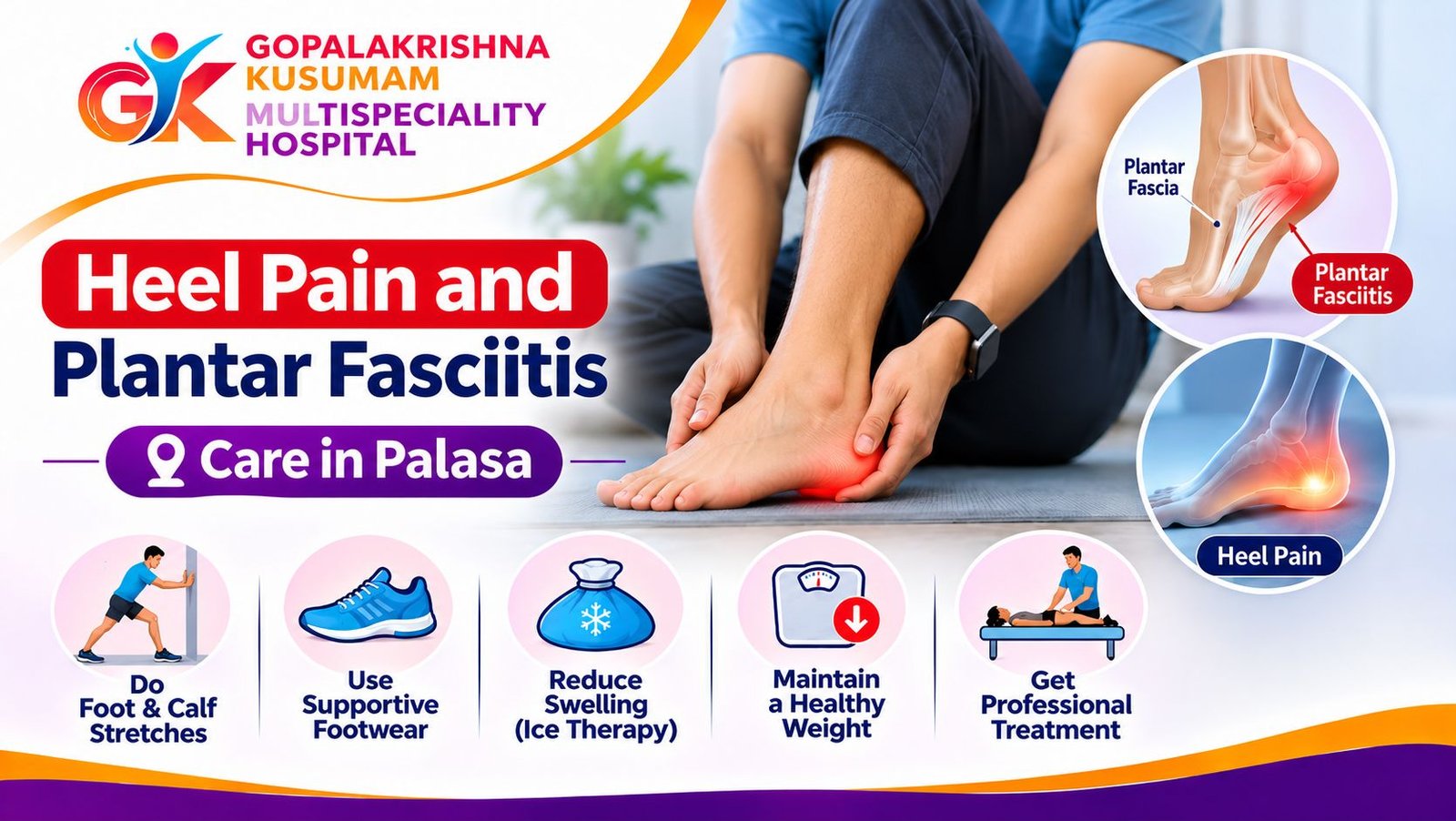
Heel Pain and Plantar Fasciitis Care in Palasa
Plantar fasciitis and morning heel pain: causes and care
Quick answer: Sharp pain under the heel with your first steps in the morning is most often caused by plantar fasciitis, an irritation of the thick band of tissue that supports the arch of the foot. Most people improve with simple care: daily calf and foot stretches, cushioned footwear, less standing on hard floors and short rest periods. See an orthopaedic doctor if the pain is severe, follows an injury, or has not improved after about two weeks of home care.
In Palasa, Kasibugga and the villages around them, many people spend long hours on their feet. Workers in cashew processing units stand at their tables for most of the day. Shopkeepers, teachers, nurses and vendors stand on hard floors all day. At home, many of us walk barefoot on cement or tiled floors, and farmers often work barefoot in the fields. Heel pain is therefore a common reason to see a bone and joint doctor.
The good news is that the most common cause of heel pain, plantar fasciitis, usually settles with simple, inexpensive steps that you can start at home. This guide explains the causes, helpful exercises and footwear, remedies to avoid, and warning signs.
What is plantar fasciitis?
The plantar fascia is a strong, thick band of tissue that runs along the sole of the foot, from the heel bone to the base of the toes. It works like a bowstring that supports the arch and absorbs the strain of every step. When this band is overloaded again and again, it becomes irritated and painful where it attaches to the heel. That condition is called plantar fasciitis.
According to the American Academy of Orthopaedic Surgeons, plantar fasciitis is one of the most common causes of pain on the bottom of the heel, and it is seen most often in people aged 40 to 60 (AAOS OrthoInfo: Plantar Fasciitis and Bone Spurs).
Typical symptoms
Plantar fasciitis has a pattern that many people recognise immediately:
- Sharp or stabbing pain under the heel or along the inner arch.
- Pain that is worst with the first few steps after getting out of bed in the morning, or after sitting for a long time, such as after a bus journey.
- The pain often eases after a few minutes of walking, but returns after long periods of standing or walking.
- Pain may be worse after activity rather than during it.
- It can hurt to raise your toes or to climb stairs.
Usually only one foot is affected, but both feet can be. Some people say it feels like "stepping on a stone" or "a needle in the heel".
Why does it happen? Common risk factors
Often there is no single cause. But several things make the plantar fascia more likely to become strained:
- Standing for long hours on hard surfaces, which is common in factory, shop, classroom and hospital work.
- A sudden increase in activity, for example starting long morning walks, jogging or dancing practice without building up slowly.
- Being overweight, which adds load to the heel with every step.
- Tight calf muscles that pull on the heel.
- Foot shape, such as flat feet or a very high arch.
- Worn-out or unsupportive footwear, including thin rubber slippers, flat sandals with no cushioning and backless chappals.
- Walking barefoot on hard floors at home, at work or in places of worship.
- Age: it is most common in middle age.
Is it a heel spur?
Many people with heel pain are told they have a "heel spur" after an X-ray. A heel spur is a small bony growth on the heel bone. According to the AAOS, most people who have heel spurs do not have heel pain, and the spur itself is not the cause of plantar fasciitis pain. This means the pain can usually be treated without removing the spur. If an X-ray report mentions a spur, do not panic; focus on the treatment plan your doctor gives you.
Simple stretches that help
Stretching the calf and the sole of the foot is one of the most useful things you can do. The exercises below are based on guidance from the AAOS. Stretch gently; you should feel a pull, not sharp pain. If an exercise makes your pain clearly worse, stop and ask your doctor or physiotherapist.
1. Wall calf stretch
Stand facing a wall and place your hands on it. Keep the painful leg straight behind you with the heel flat on the floor, and bend the front knee. Lean your hips gently towards the wall until you feel a stretch in the calf of the back leg. Hold for about 10 seconds, relax and repeat. The AAOS suggests repeating this around 20 times for each foot.
2. Seated plantar fascia stretch
Sit down and cross the painful foot over your other knee. Hold your toes and gently pull them back towards your shin until you feel the band under your foot tighten. Hold for about 10 seconds and repeat. If you cannot reach your toes, loop a towel or dupatta around the ball of your foot and pull gently.
3. Before your first steps in the morning
Because the pain is often worst first thing in the morning, try the seated stretch, or a few gentle ankle circles, while sitting on the bed before you stand up. Rolling the sole of your foot over a small bottle of cool water for a few minutes in the evening can also feel soothing.
4. Low-impact activity
While your heel is sore, choose activities that put less load on the foot, such as cycling or swimming, instead of long walks on hard roads.
Footwear and daily habits
Small daily changes often make a big difference.
- Wear cushioned footwear with good arch support, both outdoors and at home. A soft-soled slipper or sandal for indoor use helps if your floors are hard.
- Avoid thin rubber slippers, flat backless chappals and high heels while your heel is painful. The NHS also advises against flip-flops and tight, pointed shoes for plantar fasciitis (NHS: Plantar fasciitis).
- Use heel pads or cushioned insoles if you must stand for long hours. Simple off-the-shelf insoles help many people; ask your doctor before buying expensive custom insoles.
- Avoid walking barefoot on hard surfaces as much as possible.
- Break up long standing periods. If your work allows, sit for a few minutes every hour, or shift your weight and stretch your calves.
- Rest and raise your foot when you can, and use an ice pack wrapped in a cloth for up to 20 minutes at a time, as the NHS suggests.
- Aim for a healthy weight if you are overweight, as this reduces the load on your heels.
Home remedies to avoid
Some common remedies can do more harm than good:
- Do not apply very hot fomentation or hot bricks directly to the heel. They can burn the skin, especially in people with diabetes, who may have reduced feeling in their feet.
- Avoid deep, forceful massage by untrained people on a very painful heel.
- Do not take painkiller tablets for weeks on your own. Short-term pain relief may help, but long-term use without a doctor's advice can upset the stomach and affect the kidneys.
- Do not accept injections without a proper diagnosis. Steroid injections are sometimes used when other measures have not helped, but they are a medical decision for a qualified doctor after examining you.
How is heel pain diagnosed?
In most people, a doctor can diagnose plantar fasciitis from your description of the pain and a careful examination of your foot and ankle. The doctor will press on different parts of the heel, check your arch and calf flexibility, and look for signs of other problems. An X-ray may be advised to rule out other causes such as a stress fracture or arthritis. Other scans are needed only occasionally, when the doctor suspects a different problem.
Not all heel pain is plantar fasciitis. Pain at the back of the heel may come from the Achilles tendon. Burning, tingling or numbness may suggest a nerve problem. Heel pain in both feet along with pain in other joints may point to an inflammatory arthritis. That is why it is worth getting a proper diagnosis if the pain does not settle.
Treatment: what to expect
Most people get better without surgery. The AAOS notes that more than 90% of patients with plantar fasciitis improve within 10 months of starting simple treatment methods. Recovery can be slow, so patience and regular stretching matter.
A treatment plan may include:
- Activity changes, rest and ice.
- A daily stretching programme, often taught by a physiotherapist.
- Footwear advice, heel pads or insoles, and sometimes a night splint that keeps the foot gently stretched while you sleep.
- Short courses of pain-relief medicine, if your doctor feels they are suitable for you.
- If pain continues despite these measures, your doctor may discuss other options, such as an injection or shock-wave therapy. Surgery is considered only rarely, when long-term non-surgical care has not helped.
When should you see an orthopaedic doctor?
Book a consultation if:
- Your heel pain is severe or is stopping you from working or walking normally.
- It has not improved after about two weeks of home care, as the NHS advises, or it keeps coming back.
- You have tingling, burning or loss of feeling in your foot.
- You have diabetes and any foot pain, sore or wound. Foot problems can be more serious with diabetes and should be checked early.
- The pain is at night or at rest, or you also have fever, redness or swelling.
Seek urgent care if heel pain started suddenly after a fall or a jump from a height (for example from a ladder, a tree or a vehicle), if you heard a snap or pop at the back of the ankle, or if you cannot put weight on the foot. These can be signs of a heel fracture or an Achilles tendon injury and need prompt attention. In an emergency, call 108 or 112.
At Gopala Krishna Kusuma Multispeciality Hospital's orthopaedics department in Kasibugga, our doctors can examine your foot, advise on any tests you need and plan treatment with you. If you also have knee problems, our guide to knee pain causes, diagnosis and treatment options may help. You can book an appointment online.
Frequently asked questions
Why does my heel hurt most in the morning?
During sleep the plantar fascia, the band of tissue under your foot, tightens and shortens. When you take your first steps, it is suddenly stretched, which causes sharp pain under the heel. The pain often eases after a few minutes of walking. Gentle stretches before getting out of bed can help.
How long does plantar fasciitis take to heal?
It varies. Many people notice improvement within a few weeks of regular stretching and footwear changes, but full recovery can take several months. The American Academy of Orthopaedic Surgeons notes that more than 90% of patients improve within 10 months of simple treatment.
Does a heel spur need surgery?
Usually not. Most people with a heel spur on an X-ray have no heel pain, and the spur is not the cause of plantar fasciitis pain. Heel pain is normally treated with stretches, footwear changes and other non-surgical care. Your doctor will advise you based on your own examination.
What footwear is good for heel pain?
Choose footwear with a cushioned heel, good arch support and a firm back. Avoid thin rubber slippers, flat backless chappals, flip-flops and high heels while your heel is painful. Soft-soled footwear at home also helps if your floors are hard.
Is walking good for plantar fasciitis?
Gentle walking in supportive footwear is usually fine, but long walks or standing for hours on hard surfaces can make the pain worse. While your heel is sore, low-impact exercise such as cycling or swimming is easier on the foot. Build up walking slowly as the pain improves.
When is heel pain an emergency?
Get urgent medical help if heel pain starts suddenly after a fall or a jump, if you heard a pop or snap, if you cannot put weight on the foot, or if the heel is very swollen, red and hot with fever. In an emergency, call 108 or 112.
Contact the hospital
For an orthopaedic consultation at Gopala Krishna Kusuma Multispeciality Hospital, 3B, 5c 431/3A, Jayaramachandrapuram road, Kasibugga, Padmanabhapuram colony, Shivaji Nagar, Palasa, Andhra Pradesh 532222, call +91 79008 08790, or visit our contact page for directions and other ways to reach us. In an emergency, call 108 or 112.
Hours: OPD Monday to Saturday, 9 AM to 9 PM; emergency services 24 hours.
Disclaimer: This article is for general information only and is not a substitute for professional medical advice, diagnosis or treatment. Please consult a qualified doctor about your own health.
Image credit: Timothy Krause, via Wikimedia Commons, CC BY 2.0; cropped and resized. Representative stock image; it does not show the hospital's patients, staff or premises.