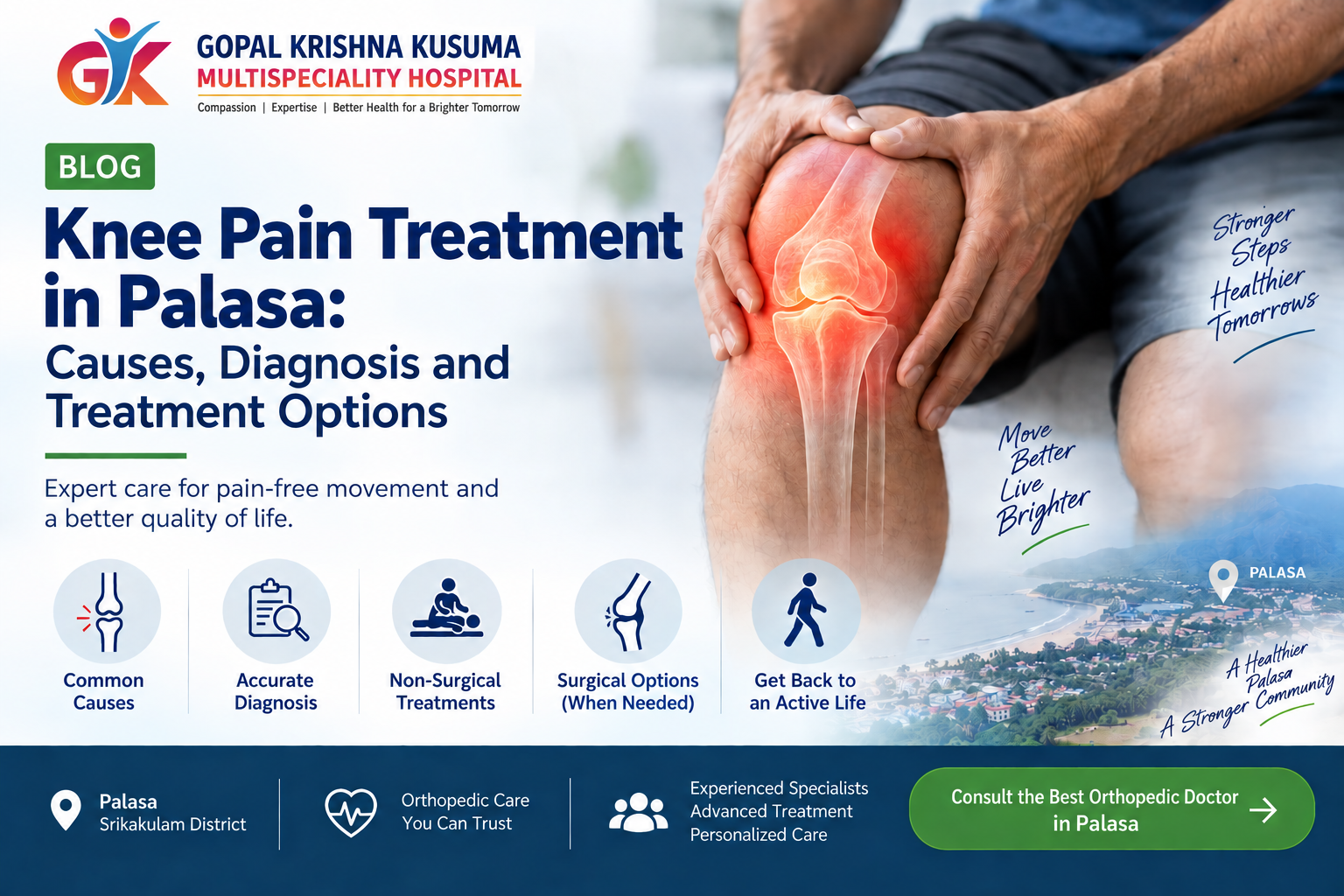
Knee Pain Treatment in Palasa: Causes, Diagnosis and Treatment Options
Knee Pain Treatment in Palasa: Causes, Diagnosis and Treatment Options
Knee pain is a common problem that can affect people of different ages. For some, it may begin as mild discomfort after walking, climbing stairs, exercising, or standing for long periods. For others, persistent knee pain can make everyday activities such as walking to the market, getting up from a chair, or sleeping comfortably difficult.
If you are experiencing ongoing knee pain in Palasa, identifying the underlying cause is an important first step. Knee pain can result from age-related joint changes, arthritis, previous injuries, ligament or meniscus problems, overuse, or other medical conditions. The right treatment depends on the cause, severity of symptoms, age, activity level, and overall health.
For people searching for the Best Orthopedic Doctor in Palasa, getting a proper evaluation from an experienced orthopaedic specialist can help determine whether your condition can be managed with conservative treatment or requires more advanced intervention.
What Causes Knee Pain?
Knee pain does not have a single cause. An orthopaedic doctor will consider your symptoms, medical history, activity level and examination findings before determining the likely cause.
Some common causes include:
1. Knee Osteoarthritis
Osteoarthritis is one of the common causes of persistent knee pain, particularly among middle-aged and older adults. It occurs when the protective cartilage within the joint gradually wears down.
Common symptoms may include:
-
Knee pain while walking or climbing stairs
-
Stiffness after sitting or resting
-
Swelling around the knee
-
Reduced flexibility
-
Grinding or clicking sensations
-
Difficulty performing everyday activities
Age, previous injuries, excess body weight, genetics and repetitive stress on the knee can increase the risk of osteoarthritis.
2. Ligament Injuries
The knee contains several important ligaments that provide stability. A sudden twist, fall, sports injury or accident can damage these structures.
A ligament injury may cause:
-
Sudden pain
-
Swelling
-
Difficulty putting weight on the leg
-
A feeling that the knee is unstable
-
A popping sensation at the time of injury
Depending on the severity, treatment may range from rest and rehabilitation to surgical treatment.
3. Meniscus Injuries
The menisci are pieces of cartilage that help absorb shock within the knee. Twisting the knee, particularly while the foot is planted, can cause a meniscus injury.
Symptoms can include pain, swelling, stiffness, clicking or difficulty fully bending or straightening the knee.
4. Tendon Problems
Repeated running, jumping, squatting or other activities can put stress on the tendons around the knee. This may lead to conditions such as tendinitis.
Pain is often more noticeable during physical activity and may improve with appropriate rest and treatment.
5. Previous Injuries
An old knee injury can sometimes contribute to ongoing pain or increase the risk of developing osteoarthritis later in life. Previous fractures, ligament injuries, cartilage damage or surgery may affect how the knee functions over time.
6. Overuse and Repetitive Stress
Jobs or activities involving frequent squatting, kneeling, lifting, walking or climbing can place repeated stress on the knee joint.
Reducing excessive strain and addressing muscle weakness or movement problems may help prevent symptoms from becoming persistent.
7. Gout, Bursitis and Other Conditions
Knee pain can also occur because of conditions such as bursitis, gout, inflammatory arthritis or joint infection.
A hot, red, severely swollen knee, particularly when accompanied by fever or feeling unwell, requires prompt medical assessment.
Common Symptoms of Knee Problems
Knee conditions can produce different symptoms depending on the underlying cause.
You may experience:
-
Pain while walking
-
Pain when climbing or descending stairs
-
Knee stiffness
-
Swelling
-
Difficulty bending or straightening the knee
-
Clicking or grinding sensations
-
Knee instability or giving way
-
Pain after prolonged sitting
-
Difficulty standing up from a chair
-
Reduced ability to exercise
-
Pain that interferes with sleep
Persistent symptoms should not simply be ignored, especially when they start affecting your mobility or daily activities.
When Should You See an Orthopedic Doctor for Knee Pain?
Occasional mild knee discomfort may improve with appropriate rest and activity modification. However, you should consider consulting an orthopaedic specialist when:
-
Knee pain continues for several weeks
-
Pain keeps returning
-
Swelling is persistent
-
You have difficulty walking
-
Your knee frequently gives way
-
The joint becomes stiff or difficult to move
-
Pain interferes with sleep
-
You cannot comfortably perform normal activities
-
Knee pain follows an accident or sports injury
After an injury, inability to put weight on the knee, significant swelling or deformity, or severe pain requires prompt medical attention.
How Is Knee Pain Diagnosed?
Finding the cause of knee pain is essential before deciding on treatment. An orthopaedic consultation generally begins with a detailed discussion about your symptoms and medical history.
1. Medical History
The doctor may ask:
-
When did the pain begin?
-
Did it start suddenly or gradually?
-
Was there an injury?
-
Where exactly is the pain?
-
Does walking make it worse?
-
Do you experience swelling or stiffness?
-
Does the knee lock or give way?
-
Have you tried any previous treatment?
These details can provide important clues about the underlying problem.
2. Physical Examination
The doctor may examine:
-
Knee movement
-
Joint stability
-
Swelling
-
Tenderness
-
Muscle strength
-
Alignment of the leg
-
Walking pattern
Different physical tests can help identify possible ligament, meniscus or other structural problems.
3. X-Ray
An X-ray may be recommended when the doctor suspects arthritis, a fracture, changes in joint space or other bone-related problems.
For knee osteoarthritis, X-rays can help show changes such as reduced joint space and bone spurs.
4. MRI Scan
An MRI provides more detailed images of soft tissues such as:
-
Ligaments
-
Menisci
-
Tendons
-
Cartilage
It may be recommended when the doctor needs additional information that cannot be obtained from an X-ray.
5. Other Tests
Depending on the symptoms, additional investigations may be considered to rule out conditions such as inflammatory arthritis, gout or infection.
The appropriate tests depend on the individual patient rather than simply the presence of knee pain.
Knee Pain Treatment in Palasa
Treatment depends on what is causing your knee pain and how severe the condition is. Many knee problems can initially be managed without surgery.
1. Activity Modification
Temporarily reducing activities that increase pain can give an irritated knee time to recover.
However, completely avoiding movement for long periods is generally not advisable unless specifically recommended by your doctor.
2. Physiotherapy and Exercise
A structured exercise or physiotherapy programme may help improve:
-
Knee strength
-
Flexibility
-
Muscle support around the joint
-
Balance
-
Mobility
Exercise is an important part of managing many knee conditions, including osteoarthritis.
Your exercise programme should be appropriate for your condition and fitness level.
3. Weight Management
For people who are overweight, gradual weight reduction can reduce stress placed on weight-bearing joints such as the knees.
Your doctor or healthcare professional can help develop an appropriate activity and weight-management plan.
4. Medicines
Depending on your condition, an orthopaedic doctor may recommend medicines for pain or inflammation.
Medicines should not be taken regularly without appropriate medical advice, particularly if you have other medical conditions or take other medications.
Some anti-inflammatory medicines may not be suitable for everyone, so a doctor should assess their risks and benefits for the individual patient.
5. Injections
For selected patients, an orthopaedic specialist may consider injections into the knee.
The type of injection and whether it is appropriate depends on the diagnosis. For example, corticosteroid injections may provide short-term relief for some people with knee osteoarthritis.
Patients should discuss the potential benefits, limitations and risks of any injection treatment with their doctor.
6. Supportive Devices
In selected cases, a doctor may recommend a cane, brace or other support to improve mobility or reduce discomfort.
These should be selected based on the patient's specific condition rather than used routinely for every type of knee pain.
7. Surgery
Surgery is not automatically required for knee pain.
It may be considered when there is significant structural damage, a serious injury, or advanced arthritis that continues to cause substantial pain and disability despite appropriate non-surgical treatment.
Depending on the condition, surgical options may include procedures for ligament or meniscus injuries or knee replacement surgery for appropriately selected patients with advanced joint damage.
The decision should be made after discussing the diagnosis, available alternatives, expected benefits, risks and recovery requirements with an orthopaedic specialist.
Is Knee Replacement Always Necessary for Arthritis?
No.
A diagnosis of knee osteoarthritis does not automatically mean that you need knee replacement surgery.
Many patients can initially benefit from a combination of exercise, physiotherapy, lifestyle changes and appropriate medication. Treatment should be individualized according to symptoms, examination findings and the severity of joint damage.
Knee replacement may be considered when arthritis has become advanced and pain or functional limitations remain significant despite appropriate conservative treatment.
An orthopaedic specialist can help determine whether surgery is appropriate for your particular situation.
Why Choose an Orthopedic Specialist in Palasa?
For patients living in Palasa and nearby areas, accessing orthopaedic care locally can make evaluation and follow-up more convenient.
A local specialist can assess common conditions such as:
-
Knee arthritis
-
Joint pain
-
Sports injuries
-
Fractures
-
Ligament injuries
-
Other bone and joint problems
At Gopala Krishna Multi Speciality Hospital, Palasa, orthopaedic services include treatment for fractures, arthritis, joint pain, sports injuries and trauma using surgical and non-surgical approaches.
The hospital's orthopaedic care is led by Dr. S. V. Gopala Krishna, MBBS, MS (Ortho), Consultant Orthopaedic & Joint Replacement Surgeon, with a stated focus on bone and joint disorders, fracture and trauma management, arthritis, sports injuries and joint replacement surgery.
For people searching online for the Best Orthopedic Doctor in Palasa, it is important to look beyond the keyword itself and consider relevant qualifications, experience, the range of orthopaedic services available, diagnostic support, treatment options and follow-up care.
Orthopedic and Knee Care at Gopala Krishna Multi Speciality Hospital, Palasa
Gopala Krishna Multi Speciality Hospital provides orthopaedic and trauma care for patients with different bone and joint conditions.
According to the hospital, its orthopaedic services include:
-
Arthritis treatment
-
Joint pain management
-
Sports injury treatment
-
Fracture and trauma care
-
Joint replacement surgery
-
Surgical and non-surgical orthopaedic treatment
The hospital states that it has more than 10 years of experience in orthopaedic care and reports more than 5,000 successful surgeries and 15,000+ patients.
The hospital also lists 24/7 emergency trauma care for fractures, accidents and orthopaedic emergencies.
How to Prepare for Your Orthopedic Consultation
Before visiting an orthopaedic doctor, consider noting:
-
When your knee pain started
-
Activities that increase or reduce the pain
-
Previous knee injuries
-
Any swelling or stiffness
-
Current medicines
-
Previous scans or X-rays
-
Previous treatments or physiotherapy
-
Other health conditions
If you already have X-rays, MRI reports or previous medical records, take them with you. This can help the doctor understand your previous diagnosis and treatment history.
Knee Pain Prevention Tips
While not every knee problem can be prevented, some habits may help support joint health:
Stay Physically Active
Regular, appropriate physical activity can help maintain muscle strength and joint mobility.
Maintain a Healthy Weight
Maintaining a healthy weight can reduce excessive stress on weight-bearing joints.
Strengthen Supporting Muscles
Strong muscles around the hips and legs can help support knee function.
Avoid Sudden Increases in Exercise
Increase exercise intensity gradually instead of suddenly putting excessive stress on the knees.
Treat Injuries Properly
Do not ignore recurring pain following an injury. Early assessment may help identify problems that require treatment.
Frequently Asked Questions About Knee Pain Treatment in Palasa
What is the most common cause of knee pain in older adults?
Osteoarthritis is a common cause of knee pain and stiffness in middle-aged and older adults. However, other conditions can cause similar symptoms, so proper evaluation is important.
Can knee pain be treated without surgery?
Yes. Depending on the cause, many knee conditions can initially be managed using approaches such as exercise, physiotherapy, activity modification, weight management and appropriate medication.
When should I see the Best Orthopedic Doctor in Palasa for knee pain?
Consider consulting an orthopaedic specialist if your knee pain persists, repeatedly returns, affects walking or sleep, causes swelling or instability, or interferes with everyday activities.
Do I need an MRI for knee pain?
Not always. The need for an MRI depends on your symptoms, physical examination and suspected condition. X-rays may be sufficient for some conditions, while MRI can provide additional information about ligaments, menisci, cartilage and other soft tissues.
Does every arthritis patient need knee replacement?
No. Knee replacement is generally considered only for appropriately selected patients with significant symptoms and joint damage when other treatment approaches have not provided adequate relief.
Where can I get orthopedic consultation in Palasa?
Gopala Krishna Multi Speciality Hospital provides orthopaedic and trauma care in Palasa, including treatment for arthritis, joint pain, sports injuries, fractures and joint replacement.
Consult an Orthopedic Specialist for Persistent Knee Pain in Palasa
Knee pain should not always be considered a normal part of ageing. Whether your symptoms are caused by arthritis, an old injury, overuse or another condition, identifying the cause is the first step toward choosing the right treatment.
If knee pain is affecting your ability to walk, climb stairs, exercise, work or sleep, consider getting an evaluation from an experienced orthopaedic specialist.
Gopala Krishna Multi Speciality Hospital in Palasa provides comprehensive orthopaedic care, including non-surgical and surgical treatment options for bone and joint conditions.
Book an Orthopedic Consultation in Palasa
Gopala Krishna Multi Speciality Hospital
Address: 3B, 5C, 431/3A, Jayaramachandrapuram Road, Shivaji Nagar, Kasibugga, Palasa
Phone: 08945 241130 / +91 79008 08790
Timings: Monday to Saturday, 9:00 AM – 9:00 PM
If you have persistent knee pain, consult an orthopaedic specialist for a proper diagnosis and personalized treatment plan rather than relying only on self-treatment.