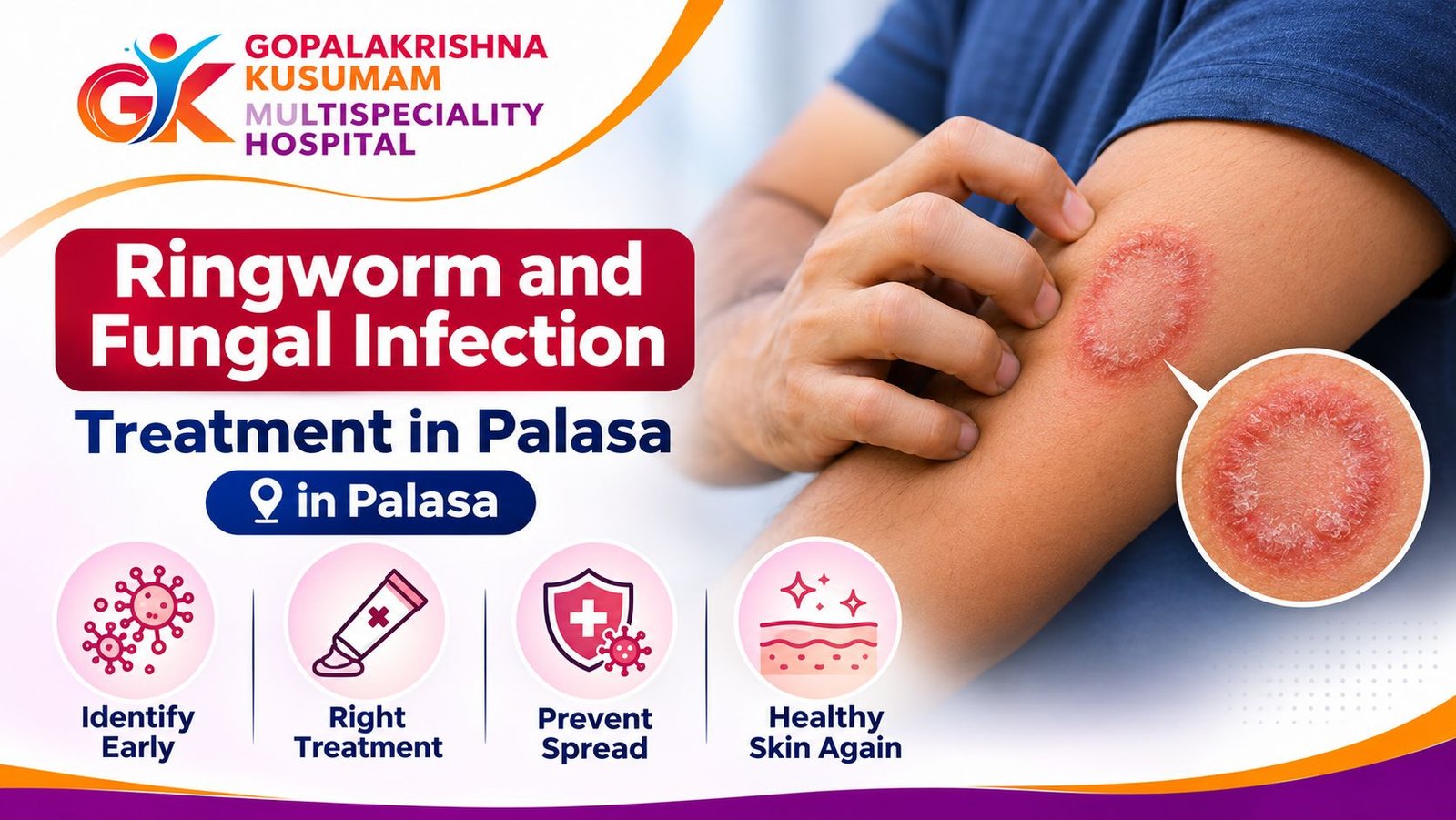
Ringworm and Fungal Infection Treatment in Palasa
Ringworm and fungal skin infections: causes, treatment and prevention
Quick answer: Ringworm (tinea) is a common fungal skin infection, not a worm, that causes an itchy, scaly, often ring-shaped rash in places like the groin, waist, thighs, underarms and feet. It keeps coming back mainly when treatment is stopped too early, when steroid-containing "mixed" creams are used, or when sweat, tight clothes and shared towels keep the fungus alive. A dermatologist can confirm the diagnosis and prescribe the right antifungal treatment for the right length of time.
In Palasa, Kasibugga and across coastal Srikakulam, the months after the monsoon are warm and humid. Clothes take longer to dry, we sweat through the day, and many people work long hours outdoors, in cashew processing units, fields, markets or on two-wheelers. These are ideal conditions for fungal skin infections. Many families have someone with an itchy patch in the groin or around the waist that "goes away and comes back".
Fungal infections are treatable, but in India they have become harder to clear over the last decade. Dermatologists have described an "epidemic-like" rise in chronic, recurrent and widespread ringworm, and have linked it partly to the misuse of over-the-counter creams that contain steroids (Indian Journal of Dermatology, Venereology and Leprology). This guide explains why ringworm keeps returning, what to avoid, and how to treat and prevent it properly. It is general information only; please see a qualified doctor about your own skin.
What is ringworm?
Despite its name, ringworm has nothing to do with worms. It is an infection of the outer layer of skin caused by a group of fungi called dermatophytes, which feed on keratin, the protein in skin, hair and nails. Doctors call it "tinea", followed by the body part affected:
- Tinea corporis: on the body, such as the waist, back, arms or legs.
- Tinea cruris (jock itch): in the groin and inner thighs, very common in men and women in hot weather.
- Tinea pedis (athlete's foot): between the toes and on the soles, common in people who wear closed shoes or work in water.
- Tinea capitis: on the scalp, more common in children; it can cause patchy hair loss.
- Tinea unguium: in the nails, making them thick, discoloured and crumbly.
In Telugu, many people call it "tamara". It spreads through close skin contact with an infected person or animal, and through shared towels, bedsheets, combs and clothes (NHS: Ringworm).
Common symptoms
Signs to look out for include:
- An itchy rash, often ring-shaped or round, with a raised, scaly edge and a clearer centre.
- Red, pink, brown or darker patches, depending on your skin tone.
- Itching that gets worse with sweat, heat or at night.
- Patches that slowly spread outward or join together into larger areas.
- Peeling, cracked or white, soggy skin between the toes.
- Scaly patches with hair loss on the scalp in children.
Not every itchy ring is ringworm. Eczema, psoriasis, some allergies and other conditions can look similar, and they are treated very differently. That is why it is worth getting a diagnosis from a doctor, especially if a rash is large, keeps coming back or does not respond to treatment.
Why does ringworm keep coming back?
This is the question dermatologists hear most often. Common reasons include:
1. Using steroid "mixed" creams
Many creams sold over the counter combine a steroid with an antifungal and an antibiotic. The steroid reduces itching and redness quickly, so the patch seems to improve within days. But steroids also weaken the skin's local defence, allowing the fungus to grow and spread underneath. When the cream is stopped, the rash returns, often bigger and in odd shapes that are harder to recognise. Long use of strong steroid creams can also thin the skin and cause stretch marks, especially in the groin and inner thighs.
2. Stopping treatment too soon
The itch may settle in a week, but fungus can remain in the skin for longer. Doctors usually advise continuing treatment for some time after the skin looks clear. The NHS notes that antifungal treatment may be needed every day for up to four weeks and should be used for the full recommended time even after the rash has gone.
3. Treating only one person in the family
Ringworm spreads easily at home. If one person is treated but others with similar itching are not, the infection can pass back and forth. Pets with patches of missing fur can also carry it.
4. Sweat, tight clothes and damp conditions
Tight jeans, synthetic innerwear, wearing the same clothes for long hours and not drying the skin properly after bathing all keep the skin warm and moist, which helps the fungus survive.
5. Self-medication and incomplete courses
Buying random creams or tablets from a shop on someone's suggestion, switching products every few days or taking leftover tablets can make the infection harder to treat. Some infections need prescription tablets, and these should be taken only under medical supervision, with the right dose and duration.
6. Other health conditions
Diabetes, obesity and a weakened immune system can make fungal infections more frequent and stubborn. If you keep getting infections, your doctor may check for these.
How is a fungal skin infection diagnosed?
Most of the time a dermatologist can recognise ringworm by looking at the rash and asking about how it started, what you have applied and whether others at home have similar symptoms. Please carry the creams and tablets you have already used, or photos of their labels, to your appointment.
If the diagnosis is not clear, or the infection is widespread or recurring, the doctor may do a simple test: gently scraping a little scale from the edge of the rash and examining it under a microscope (a KOH test). In some cases a fungal culture may be sent to identify the exact fungus. These tests usually cause little or no discomfort.
How is ringworm treated?
Treatment depends on how much skin is involved, where it is, and how long it has been present. Your doctor may advise:
- Antifungal creams or lotions for small, early patches, applied on the rash and a little beyond its edge, usually once or twice a day for the advised number of weeks.
- Antifungal tablets for widespread, long-standing or recurring infections, and for scalp and nail infections. These need a prescription; your doctor will choose the medicine, dose and duration and may check for other medicines you take.
- Dusting powders to keep folds dry, along with the main treatment.
- Medicated shampoos for scalp infections or to reduce fungal load.
- Treatment for family members who have similar symptoms.
- Advice to stop steroid creams. If you have been using a steroid cream, your doctor will guide you on stopping it safely, since the rash may flare for a while.
Follow-up visits matter. Your dermatologist may want to see you before stopping treatment to make sure the infection has really cleared.
Prevention tips for hot, humid weather
Small daily habits make a big difference, especially from the monsoon through to the end of the humid season:
- Bathe daily and dry your skin completely, especially the groin, underarms, under the breasts, between the toes and skin folds.
- Wear loose, cotton clothes and cotton innerwear; change them daily and after heavy sweating.
- Dry clothes and towels fully in the sun before using them again; avoid wearing damp clothes.
- Do not share towels, combs, clothes or bedsheets; wash bedding regularly in hot water if possible.
- Keep feet dry; change socks daily and let shoes air out. Choose open footwear when possible.
- Do not scratch the rash, as this can spread it to other areas.
- Avoid applying creams on the advice of friends or shopkeepers without a diagnosis, particularly creams containing steroids.
- If your pet has patchy hair loss, take it to a vet.
- Keep blood sugar under control if you have diabetes.
When should you see a dermatologist?
Book a skin consultation if:
- The rash is spreading, very itchy or affecting your sleep or work.
- It has not improved after two weeks of a plain antifungal cream, or keeps coming back.
- You have been using a steroid or "mixed" cream and the rash returns when you stop.
- The rash is on the face, scalp or nails, or in a child.
- You are pregnant, breastfeeding, diabetic or have a weakened immune system.
- Several members of your family have similar itching.
Seek urgent care if the skin becomes very painful, hot and swollen, oozes pus, or you develop fever, as these may be signs of a bacterial infection.
Our dermatology department in Kasibugga sees people from Palasa and nearby villages for fungal infections and other skin, hair and nail problems. You can book an appointment online.
Frequently asked questions
Is ringworm caused by a worm?
No. Ringworm is a fungal infection of the skin caused by fungi called dermatophytes. It gets its name from the ring-shaped rash it often causes. It spreads by skin contact and through shared towels, clothes, combs and bedding.
Why does my fungal infection come back after the cream is finished?
The most common reasons are stopping treatment as soon as the itch settles, using steroid-containing combination creams, re-infection from family members or shared towels, and sweat and tight clothing. A dermatologist can find the cause and set the right treatment duration for you.
Are steroid creams bad for ringworm?
Creams containing steroids can make a fungal rash look better for a short time while allowing the fungus to spread underneath. The rash often returns larger and harder to treat, and long use can thin the skin. Use steroid creams only if a doctor prescribes them for a specific reason.
How long does ringworm treatment take?
It depends on the area and severity. Small patches may clear in two to four weeks with an antifungal cream, while widespread, scalp or nail infections can take longer and may need tablets. Continue treatment for as long as your doctor advises, even after the skin looks clear.
Is ringworm contagious?
Yes. It can pass between people through close contact and shared items, and from infected animals. Avoid sharing towels and bedding, wash them regularly and get everyone with symptoms at home treated at the same time.
Can I use home remedies for fungal infections?
Keeping the skin clean, dry and cool helps, but home remedies alone do not reliably clear a fungal infection and some can irritate the skin. It is safer to get a proper diagnosis and use an antifungal treatment recommended by a doctor.
Contact the hospital
For a dermatology (skin) consultation at Gopala Krishna Kusuma Multispeciality Hospital, 3B, 5c 431/3A, Jayaramachandrapuram road, Kasibugga, Padmanabhapuram colony, Shivaji Nagar, Palasa, Andhra Pradesh 532222, call +91 79008 08790, or visit our contact page for directions and other ways to reach us. In an emergency, call 108 or 112.
Hours: OPD Monday to Saturday, 9 AM to 9 PM; emergency services 24 hours.
Disclaimer: This article is for general information only and is not a substitute for professional medical advice, diagnosis or treatment. Please consult a qualified doctor about your own health.
Image credit: McKay Savage from London, UK, via Wikimedia Commons, CC BY 2.0; cropped and resized. Representative stock image; it does not show the hospital's patients, staff or premises.