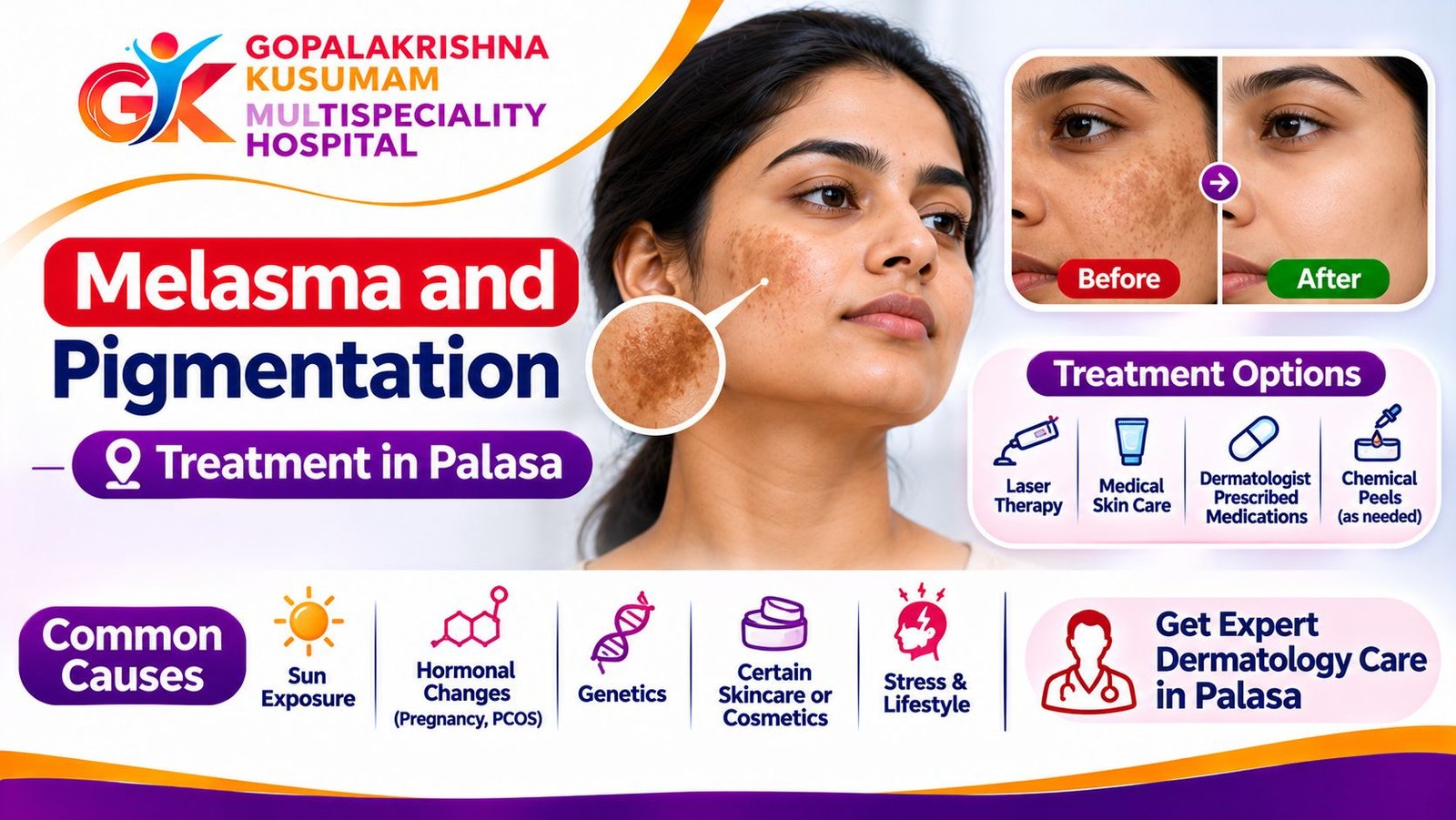
Melasma and Pigmentation Treatment in Palasa
Melasma and facial pigmentation: causes and care
Quick answer: Melasma is a common skin condition that causes brown or grey-brown patches, usually on the cheeks, forehead, nose, upper lip and chin. It is not infectious and is not cancer, but it can be long-lasting and tends to darken with sun exposure, heat, pregnancy and hormonal medicines. Daily broad-spectrum sunscreen and shade are the foundation of care, and a dermatologist can suggest suitable prescription creams or procedures. Avoid unlabelled "fairness" or steroid creams, which can damage the skin.
In Palasa, Kasibugga and across Srikakulam district, strong sunshine is part of life for most of the year. Women working in cashew units, farm fields and markets, students travelling by bus or two-wheeler, and homemakers cooking over a hot stove are all exposed to sunlight and heat every day. It is no surprise that dark patches on the face, often called "pigmentation" or "mangu" in everyday talk, are one of the most common reasons people visit a skin doctor.
One of the most frequent causes of these patches is melasma. It can affect confidence, and many people try one cream after another from a shop or online without lasting results. This guide explains what melasma is, what triggers it, what you can do at home, which products to be careful with, and what a dermatologist can offer.
What is melasma?
Melasma is a condition in which the pigment-producing cells of the skin make too much colour (melanin) in certain areas. The result is flat, brown, grey-brown or bluish-grey patches with irregular edges. The American Academy of Dermatology (AAD) explains that melasma is very common, especially in women and in people with naturally brown skin, and that it often appears on the cheeks, forehead, bridge of the nose, chin and above the upper lip (AAD: Melasma overview). It can also appear on the forearms and neck.
Melasma is not contagious, is not an allergy and is not skin cancer. It does not usually cause itching or pain. It is mainly a cosmetic concern, but it can be persistent and can return even after it has faded.
What triggers melasma?
Doctors do not know every reason why one person gets melasma and another does not, but several common triggers are well recognised:
- Sunlight: ultraviolet and visible light strongly stimulate pigment cells. Even a short time in the sun can darken melasma again, which is why it often looks worse in summer.
- Heat: working near a stove, oven or in hot conditions may worsen melasma in some people.
- Pregnancy: melasma is so common in pregnancy that it is sometimes called the "mask of pregnancy". It often fades in the months after delivery, but not always.
- Hormonal medicines: birth control pills and hormone treatment can trigger it in some women.
- Skin type and family history: people with brown skin and those with relatives who have melasma are more likely to develop it.
- Irritating skin products: harsh soaps, scrubs and products that sting or burn can make pigmentation worse.
- Stress: the AAD lists stress as one possible trigger.
Melasma or something else?
Not every dark patch on the face is melasma. Other common causes include:
- Post-inflammatory hyperpigmentation: dark marks left behind after pimples, insect bites, burns, eczema or harsh treatments.
- Freckles and sun spots: small, well-defined brown spots in sun-exposed areas.
- Darkening from unlabelled creams: some "fairness" or "skin whitening" creams sold without a prescription contain strong steroids or other ingredients that can cause thinning, redness, acne and patchy discolouration.
- Darkening linked to medical conditions: dark velvety skin on the neck or underarms can be a sign of high blood sugar or insulin resistance and should be checked.
- Fungal infections: some fungal infections cause light or dark patches, usually on the chest, back or neck rather than the face.
A dermatologist can usually tell the difference by looking carefully at the skin, sometimes with a special lamp or magnifying device. Getting the right diagnosis matters, because treatment for one type of patch can be unhelpful or even harmful for another.
Sun protection: the most important step
Because sunlight is the strongest trigger, sun protection is the foundation of all melasma care. Treatments work far less well without it. The AAD recommends the following (AAD: Melasma treatment):
- Apply a broad-spectrum sunscreen with SPF 30 or higher every day, including cloudy days and days you spend mostly indoors near windows.
- Choose a sunscreen containing zinc oxide or titanium dioxide. Tinted sunscreens that contain iron oxide also help protect against visible light, which can worsen melasma in brown skin.
- Wear a wide-brimmed hat when outside. A cap does not shade the cheeks.
- Reapply sunscreen every two hours when you are outdoors and after sweating heavily, as commonly advised by dermatologists.
- Seek shade, especially in the middle of the day. An umbrella or a cotton dupatta or scarf over the head also helps on long walks.
For people in Palasa who work outdoors or travel by two-wheeler, a practical routine is to keep a small tube of sunscreen in your bag, reapply at lunchtime, and use a hat or cover when you are outside for long periods.
Gentle skin care habits that help
- Wash your face with a mild, non-soap cleanser and lukewarm water. Avoid scrubbing, loofahs and harsh soaps.
- Avoid products that sting, burn or make your skin red, including strong lemon juice, toothpaste and other home remedies that can irritate the skin.
- Use a simple moisturiser to keep the skin barrier healthy.
- Do not pick or scratch at pimples or patches, as this can leave more dark marks.
- Be patient. Pigment fades slowly, usually over months rather than weeks.
Be careful with "fairness" and steroid creams
Many people use creams bought from a shop, a friend's recommendation or an online advertisement promising quick results. Some of these contain strong steroids, sometimes mixed with other ingredients. Used on the face for long periods, steroid creams can cause thinning of the skin, visible blood vessels, redness, acne, unwanted hair and rebound darkening when they are stopped. Some preparations sold online also contain mercury or other harmful ingredients that are not listed clearly.
Prescription-strength lightening creams can be helpful, but they should be used only under a doctor's supervision, for the advised period, and on the areas the doctor recommends. The AAD advises that if you try an over-the-counter product, you should stop and see a dermatologist if there is no improvement after about three to six months.
What a dermatologist may suggest
Treatment is planned to suit your skin type, how deep the pigment is, your age and whether you are pregnant or breastfeeding. The AAD describes several options (AAD: Melasma treatment):
- Topical creams: hydroquinone (a prescription medicine in many countries), tretinoin, mild corticosteroids, or a "triple combination" cream that combines these for a limited time. Other ingredients such as azelaic acid, kojic acid and vitamin C may also be used.
- Tranexamic acid: used as a cream, by mouth or in other forms in selected people, after the doctor checks whether it is safe for you.
- Procedures: chemical peels, microdermabrasion and certain laser or light treatments may be considered when creams alone are not enough. These need extra care in brown skin, because irritation from a procedure can actually make melasma darker.
- Maintenance: once the patches fade, a simpler maintenance routine and strict sun protection help reduce the chance of them returning.
According to the AAD, it can take three months to a year to see improvement, and melasma can come back, especially with sun exposure. A realistic plan focuses on gradual fading and long-term control rather than a quick, permanent fix.
Melasma in pregnancy and while breastfeeding
Many women first notice melasma during pregnancy. The AAD notes that melasma that starts in pregnancy may fade after the baby is born, and that it is usually advisable to wait until after pregnancy before starting treatment, because some creams are not suitable during pregnancy or breastfeeding. Sun protection with mineral sunscreens, a hat and shade is safe and helpful throughout. Always tell your doctor if you are pregnant, trying to conceive or breastfeeding before using any skin treatment.
When to see a dermatologist in Palasa
Please see a skin doctor if:
- You have new dark patches on the face and are not sure what they are.
- Patches are spreading, itchy, raised, bleeding or changing quickly. Any changing mole or spot needs a check.
- You have used over-the-counter creams for three to six months without improvement.
- Your skin became red, thin, acne-prone or darker after using a cream.
- You also have dark velvety skin on the neck, weight gain or symptoms of diabetes or thyroid problems.
Our dermatology department in Kasibugga, Palasa sees skin, hair and nail concerns for people across the Palasa and Kasibugga area. You can book an appointment online. Bring the names of any creams or medicines you have been using to your visit.
Frequently asked questions
Is melasma permanent?
Melasma can be long-lasting and can come back, especially with sun exposure, but it often fades with consistent sun protection and treatment guided by a dermatologist. Improvement is usually gradual over several months, and ongoing sun care helps keep it under control.
Can home remedies clear melasma?
Home remedies like lemon juice, toothpaste or harsh scrubs can irritate the skin and may make pigmentation darker. Gentle cleansing, a moisturiser and daily broad-spectrum sunscreen are sensible home steps. See a dermatologist for medical treatment.
Which sunscreen is good for melasma?
The American Academy of Dermatology suggests a broad-spectrum sunscreen with SPF 30 or higher that contains zinc oxide or titanium dioxide, and a tinted sunscreen with iron oxide for extra protection against visible light. Reapply it every two hours when outdoors.
Does pregnancy cause melasma?
Pregnancy is a common trigger, which is why melasma is sometimes called the mask of pregnancy. It may fade after delivery. Many creams are not suitable in pregnancy, so focus on sun protection and talk to your doctor before using any treatment.
Are skin whitening or fairness creams safe for dark patches?
Unlabelled or steroid-containing fairness creams can thin the skin and cause redness, acne and rebound darkening. Use lightening creams only when prescribed by a doctor and for the time advised.
How long does melasma treatment take?
According to the American Academy of Dermatology, it can take three months to a year to see improvement. A dermatologist can review your progress and adjust your plan over time.
Contact the hospital
For a dermatology (skin) consultation at Gopala Krishna Kusuma Multispeciality Hospital, 3B, 5c 431/3A, Jayaramachandrapuram road, Kasibugga, Padmanabhapuram colony, Shivaji Nagar, Palasa, Andhra Pradesh 532222, call +91 79008 08790, or visit our contact page for directions and other ways to reach us. In an emergency, call 108 or 112.
Hours: OPD Monday to Saturday, 9 AM to 9 PM; emergency services 24 hours.
Disclaimer: This article is for general information only and is not a substitute for professional medical advice, diagnosis or treatment. Please consult a qualified doctor about your own health.
Image credit: Hong Kong Free Press, via Wikimedia Commons, CC BY 4.0; cropped and resized. Representative stock image; it does not show the hospital's patients, staff or premises.