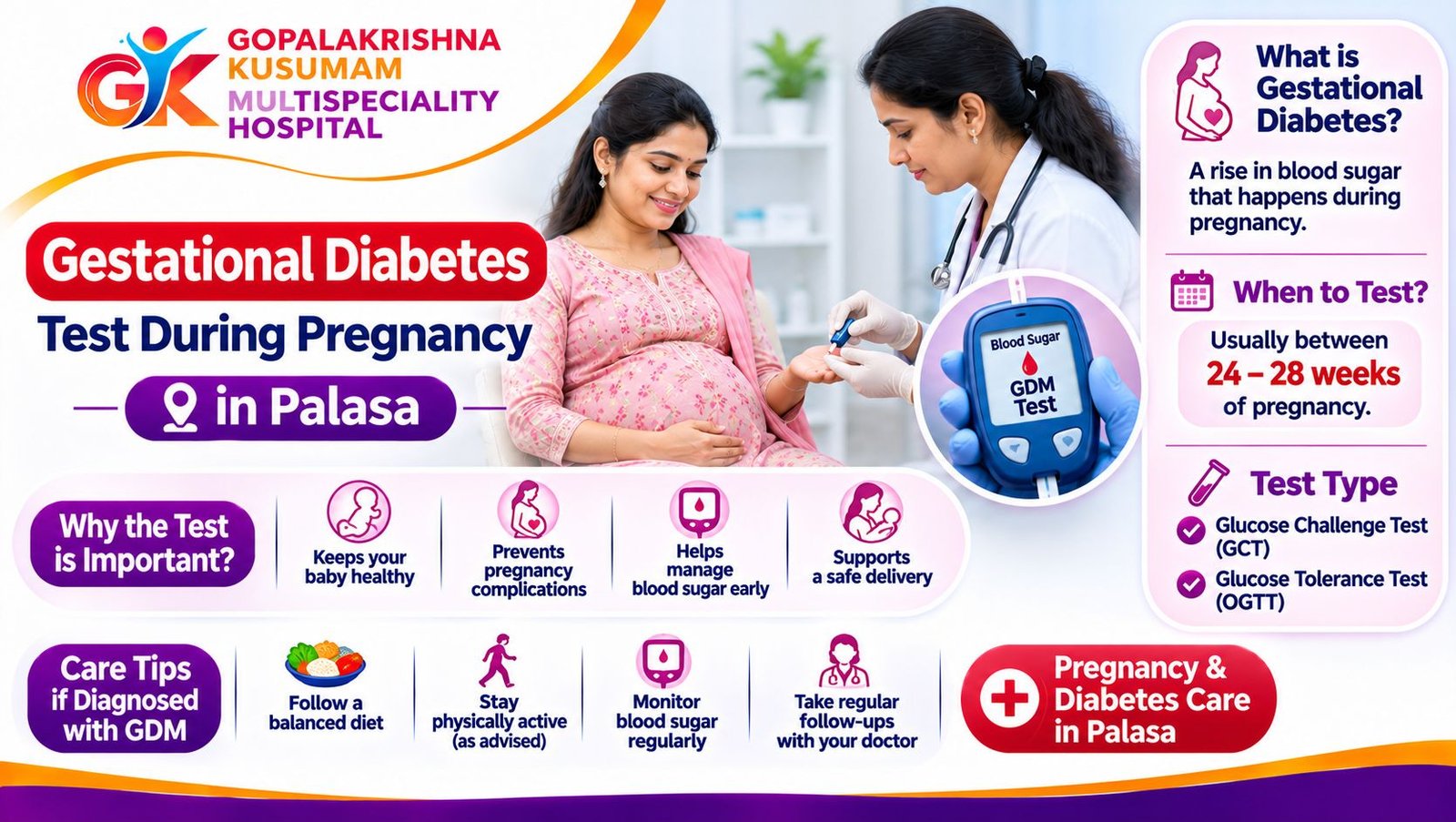
Gestational Diabetes Test During Pregnancy in Palasa
Gestational diabetes test: when, how and what results mean
Quick answer: Gestational diabetes (GDM) is high blood sugar that develops or is first found during pregnancy, and it usually causes no symptoms, so the only way to find it is a blood test. India's national guideline recommends testing every pregnant woman: first at the first antenatal visit, and again at 24 to 28 weeks if the first test is normal. The test uses 75 g of glucose dissolved in water, with a blood sugar check two hours later; a value of 140 mg/dL or more is taken as GDM. With diet changes, activity and, if needed, medicine, many women with GDM go on to have healthy pregnancies.
For many families in Palasa, Kasibugga and the villages of Srikakulam district, pregnancy check-ups focus on the scan, blood pressure and haemoglobin. A blood sugar test is sometimes skipped or delayed, especially when the mother feels well. Yet gestational diabetes is one of the most common medical problems in pregnancy, and it usually gives no warning signs at all.
The good news is that GDM is easy to test for, and when it is picked up early and managed well, the risks to mother and baby fall considerably. This guide explains what gestational diabetes is, who is at higher risk, when and how the test is done in India, what the results mean, and how it is managed.
What is gestational diabetes?
During pregnancy, hormones from the placenta make the body less sensitive to insulin, the hormone that keeps blood sugar under control. Most women's bodies make extra insulin to keep up. When the body cannot make enough, blood sugar rises, and this is called gestational diabetes mellitus or GDM.
The NHS explains that gestational diabetes usually goes away after the baby is born, but that it can cause problems during pregnancy and birth if it is not managed, and that it increases the mother's chances of developing type 2 diabetes later in life (NHS: Gestational diabetes).
Why it matters for mother and baby
If blood sugar stays high, extra sugar passes to the baby. According to the NHS, GDM can lead to:
- A baby that grows larger than usual, which can make delivery more difficult and increase the chance of an assisted birth or caesarean section.
- Too much amniotic fluid around the baby (polyhydramnios), which can cause early labour or delivery problems.
- Premature birth.
- Pre-eclampsia, a condition that causes high blood pressure in pregnancy.
- The baby having low blood sugar or jaundice after birth, which may need treatment in hospital.
- Rarely, the loss of the baby around the time of birth.
These risks are why testing is important even when the mother feels completely well.
Who is at higher risk?
Any pregnant woman can develop GDM. The NHS lists factors that raise the chance, including:
- Being over 40 years of age.
- Body mass index (BMI) above 30.
- A previous baby that weighed 4.5 kg or more at birth.
- Gestational diabetes in a previous pregnancy.
- A parent, brother or sister with diabetes.
- A family origin that is South Asian, Black, African-Caribbean or Middle Eastern.
Because women of South Asian origin have a higher risk, India's national guideline does not limit testing to women with risk factors. Instead, it recommends testing every pregnant woman.
When is the GDM test done in India?
The Ministry of Health and Family Welfare's National Guidelines for Diagnosis and Management of Gestational Diabetes Mellitus recommend universal testing of all pregnant women, done twice during antenatal care (MoHFW / NHM: National Guidelines for Diagnosis & Management of GDM):
- First test: at the first antenatal visit, as early in pregnancy as possible.
- Second test: at 24 to 28 weeks of pregnancy, if the first test was normal. There should be at least four weeks between the two tests.
- If you come late for antenatal care: the test is still done at the first visit. If you are already beyond 28 weeks, a single test is done at that visit.
In simple terms: if you are pregnant and have not had a sugar test yet, ask for one at your next check-up, whatever month you are in.
How the test is done
India's national guideline uses a single-step test that is simple and does not need you to come fasting:
- You are given 75 g of glucose dissolved in about 300 mL of water to drink, whether or not you have eaten. The drink should be finished within about five minutes.
- You then wait for two hours. It helps to sit quietly during this time and not eat, walk around a lot or leave the facility.
- After two hours, a blood sample is checked with a calibrated glucometer or in the laboratory.
- If you vomit within 30 minutes of drinking the glucose, the test is repeated on another day. If vomiting happens after 30 minutes, the test continues.
Some hospitals and doctors also use other versions of the glucose tolerance test, for example with fasting and several blood samples. Your obstetrician will tell you which method they use and whether you need to come fasting.
What the results mean
Under the national guideline:
- A two-hour value below 140 mg/dL is considered normal. If this was your first test, it is repeated at 24 to 28 weeks.
- A two-hour value of 140 mg/dL or more means gestational diabetes is diagnosed, and management starts.
A diagnosis of GDM can feel worrying, but it is a common condition and most women go on to have healthy babies with the right care. It does not mean you did anything wrong.
How gestational diabetes is managed
The national guideline starts with medical nutrition therapy, which means a planned diet, along with regular blood sugar checks. If sugar levels stay above target after about two weeks, medicine is started as decided by the doctor. The NHS similarly describes diet changes and physical activity as the first step, followed by tablets or insulin if needed.
Management usually involves:
- Diet changes: regular meals and snacks instead of one or two large meals, smaller portions of rice and other refined starches, more vegetables, dal, pulses and protein, and limiting sweets, sugary tea, juices and soft drinks. A dietitian or your doctor can help plan meals around the foods your family already eats.
- Physical activity: a daily walk after meals is often recommended, if your doctor says it is safe for you.
- Sugar monitoring: regular blood sugar checks at the clinic or at home with a glucometer, as advised.
- Medicine if needed: insulin or tablets, prescribed and adjusted by your doctor.
- Closer check-ups: more frequent antenatal visits and scans to check the baby's growth and the amount of fluid.
The national guideline notes that routine delivery before 39 weeks is not recommended for GDM, and that early delivery is planned only if sugar is not controlled or for other obstetric reasons. Your obstetrician will discuss the right plan for you.
Simple food swaps for families in Palasa
Andhra meals are rich in rice, which raises blood sugar quickly. You do not need to give up your usual foods, but small changes help:
- Fill half the plate with vegetables, a quarter with dal, egg, fish, chicken, curd or pulses, and keep rice to a smaller portion.
- Try mixing in millets such as ragi or jowar, or adding more vegetables to rice dishes, after discussing it with your doctor or dietitian.
- Choose whole fruit in moderate amounts instead of fruit juice.
- Avoid sweets, jaggery-heavy snacks, sweetened tea and coffee, and bakery items as much as possible.
- Do not skip meals or fast for long hours, as this can cause swings in blood sugar.
After the baby is born
For most women, blood sugar returns to normal soon after delivery. The baby's sugar levels are usually checked after birth. India's national guideline recommends a 75 g glucose test at about six weeks after delivery to check that the mother's sugar has returned to normal. The NHS also advises a diabetes test after delivery and then yearly checks, because GDM increases the long-term risk of type 2 diabetes.
Breastfeeding, a balanced diet, staying active and reaching a healthy weight all help lower this risk. If you plan another pregnancy, tell your doctor that you had GDM before, so that you can be tested early.
When to see an obstetrician in Palasa
Book a visit if:
- You are pregnant and have not had a blood sugar test yet.
- You are between 24 and 28 weeks and your first sugar test was normal.
- You had GDM, a large baby or diabetes in the family before.
- You feel very thirsty, pass urine much more than usual, or feel unusually tired.
Our obstetrics and gynaecology department in Kasibugga, Palasa offers antenatal care for mothers across Palasa, Kasibugga and the nearby villages. You can read more in our guide to safe motherhood and maternity care, or book an appointment online. If you have heavy bleeding, severe headache, blurred vision, fits, severe abdominal pain or reduced baby movements, call 108 or 112 or go to the nearest hospital immediately.
Note on pregnancy scans: Ultrasound scans in pregnancy are done only to check the health and growth of the mother and baby. Finding out or disclosing the sex of the baby before birth is illegal in India under the PCPNDT Act, so doctors and sonographers will not tell you.
Frequently asked questions
When should I get tested for gestational diabetes?
India's national guideline recommends a blood sugar test at your first antenatal visit, and again at 24 to 28 weeks of pregnancy if the first test is normal. If you first come for a check-up after 28 weeks, a single test is done at that visit.
Do I need to be fasting for the GDM test?
Under India's national guideline, you do not need to fast. You drink 75 g of glucose dissolved in about 300 mL of water and your blood sugar is checked after two hours. Some doctors use other test methods that need fasting, so follow your doctor's instructions.
What blood sugar level means gestational diabetes?
In the national single-step test, a two-hour plasma glucose value of 140 mg/dL or more is taken as gestational diabetes. Your doctor will explain your result and the next steps.
Does gestational diabetes harm the baby?
If it is not managed, GDM can lead to a larger baby, extra amniotic fluid, early birth and low blood sugar in the baby after birth. With testing, diet changes, activity and medicine when needed, many women with GDM go on to have healthy pregnancies and babies.
Will I need insulin if I have gestational diabetes?
Not always. Many women control their sugar with diet changes and regular activity. If sugar levels stay above target, your doctor may start insulin or tablets and adjust the dose based on your readings.
Does gestational diabetes go away after delivery?
It usually goes away after the baby is born, but it raises the chance of type 2 diabetes later. A glucose test about six weeks after delivery and regular checks after that are advised.
Contact the hospital
For an obstetrics and gynaecology consultation at Gopala Krishna Kusuma Multispeciality Hospital, 3B, 5c 431/3A, Jayaramachandrapuram road, Kasibugga, Padmanabhapuram colony, Shivaji Nagar, Palasa, Andhra Pradesh 532222, call +91 79008 08790, or visit our contact page for directions and other ways to reach us. In an emergency, call 108 or 112.
Hours: OPD Monday to Saturday, 9 AM to 9 PM; emergency services 24 hours.
Disclaimer: This article is for general information only and is not a substitute for professional medical advice, diagnosis or treatment. Please consult a qualified doctor about your own health.
Image credit: Graham Crumb, via Wikimedia Commons, CC BY-SA 3.0; cropped and resized. Representative stock image; it does not show the hospital's patients, staff or premises.