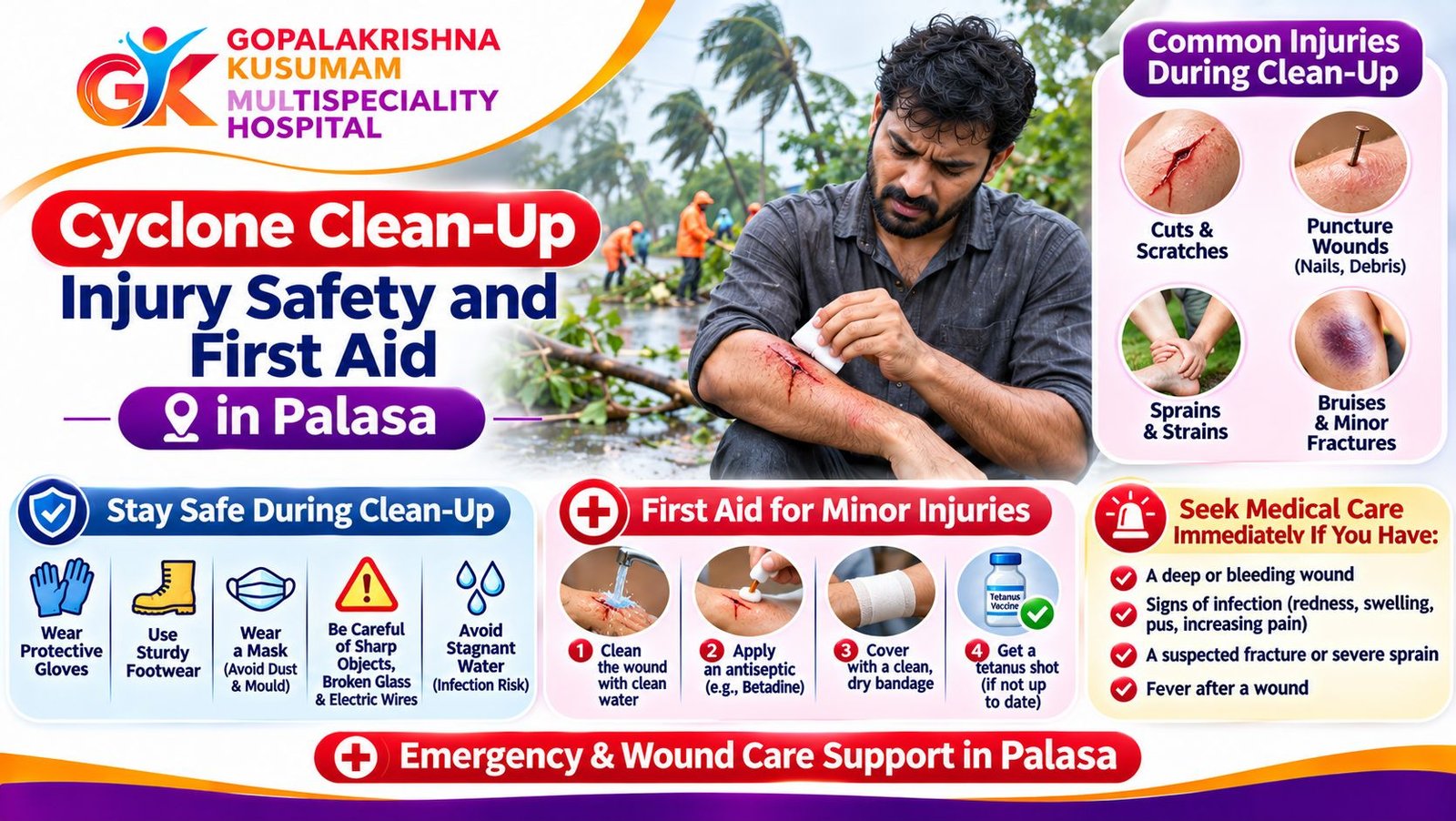
Cyclone Clean-Up Injury Safety and First Aid in Palasa
Cyclone clean-up injuries: how to stay safe and give first aid
Quick answer: Most injuries after a cyclone happen during clean-up, not during the storm itself. Stay away from fallen electric wires, do not climb roofs or trees while it is still windy or wet, wear shoes and gloves, and cut fallen branches only with help and proper tools. Press firmly on any bleeding wound, wash cuts with clean water, and see a doctor about a tetanus injection if a wound is deep or dirty. Call 108 or 112 straight away for a suspected broken bone with a wound, a head, neck or back injury, a crush injury, or heavy bleeding that will not stop.
Cyclone Arnab has brought strong winds and heavy rain to coastal Andhra Pradesh this week, and Palasa received heavy overnight rain on 27 October. In Palasa, Kasibugga and the villages of the Uddanam belt in Srikakulam district, the days after a storm usually mean the same jobs: lifting fallen coconut and cashew branches, clearing roofs and drains, fixing tin sheets and tiles, and getting shops, fields and roads on National Highway 16 working again.
These jobs are where many injuries happen. The World Health Organization notes that tropical cyclones increase physical injuries and water-borne infections and can disrupt health services, and that floodwater can hide sharp metal or glass and electrical lines, and can carry dangerous snakes.
Why the days after a cyclone carry their own risks
Once the wind drops, people understandably want to get back to normal as fast as possible. But the surroundings are not normal yet. Roofs and walls may be weakened, trees can still be partly attached and fall without warning, electric lines may be live on the ground, and floodwater can hide sharp metal, glass, holes and open drains.
Common clean-up injuries to watch for
- Falls from roofs, ladders and trees: climbing onto wet tin or asbestos sheets, tiled roofs or coconut trees to clear debris can lead to fractures of the wrist, ankle, hip or spine and to head injuries.
- Injuries from falling branches and trees: partly broken branches can drop suddenly, and a tree trunk under tension can spring back when cut.
- Cuts and puncture wounds: from broken glass, roofing sheets, nails, wire, axes, sickles and machetes, and from hidden objects under muddy water.
- Crush injuries: when a wall, tree trunk or heavy object falls on a hand, foot or leg.
- Electrical injuries: from fallen or sagging wires, wet switchboards and pumps, and generators that are not wired safely.
- Wound infections: cuts that come into contact with floodwater, soil or animal waste can become infected, and tetanus is a real risk with dirty wounds.
Safety steps before you start clearing up
A few minutes of planning can prevent most serious injuries:
- Wait for the all-clear. Follow official weather updates and do not begin work on roofs or trees while it is still windy or raining.
- Treat every fallen wire as live. Keep well away from wires on the ground, on trees or touching water or tin sheets, and report them to the electricity department. Do not try to move them with a stick.
- Switch off the main supply before entering a house that has been flooded, and get wiring and pumps checked before switching back on.
- Dress for the job. Wear closed shoes or gumboots, full-length clothes and thick gloves. Avoid walking barefoot in water or debris.
- Work in pairs. Never climb or cut trees alone, and leave large trees near houses or wires to trained teams.
- Use ladders safely. Place them on firm, dry ground, keep three points of contact, and do not lean out to the side.
- Lift with your legs, not your back. Bend your knees, keep the load close, and share heavy loads.
- Use generators only outdoors, away from doors and windows, because their fumes contain carbon monoxide, which can be deadly in closed rooms.
First aid for cuts and wounds
For a bleeding wound, press firmly on it with a clean cloth for at least ten minutes without lifting to check. If blood soaks through, add another cloth on top and keep pressing. Raising an injured arm or leg above the level of the heart can help, as long as you do not suspect a fracture.
Once the bleeding slows, rinse the wound well with clean drinking water or boiled and cooled water, remove loose dirt gently, and cover it with a clean dressing. Do not apply mud, ash, coffee powder, turmeric paste, toothpaste or other household remedies to an open wound, as these can increase the chance of infection.
See a doctor the same day if a wound is deep, gaping or longer than a couple of centimetres, keeps bleeding, has dirt or rust that you cannot clean out, was caused by a nail or animal bite, or is on the face, hand or a joint. Over the next few days, watch for redness that spreads, swelling, pus, increasing pain or fever, which can be signs of infection.
Tetanus: why a dirty wound needs attention
Tetanus is a serious infection caused by bacteria found in soil and manure. The NHS explains that the bacteria can enter the body through a wound such as a bite, burn or scratch, and that symptoms include a stiff jaw (lockjaw) and painful muscle spasms. The risk is higher if you are not fully vaccinated, the wound is large or deep, or the wound is very dirty or has something stuck in it.
After a cyclone, many wounds are contaminated with soil, floodwater or rusty metal. If you cannot remember your last tetanus injection, or never completed the course, ask a doctor or your nearest health centre whether you need a booster.
First aid for a suspected fracture
A broken bone is likely if there was a hard fall or blow and the limb is very painful, swollen, bent or out of shape, cannot bear weight, or if a crack was heard. In that case:
- Keep the injured part still and support it in the position you found it. Do not try to straighten it.
- Use a folded newspaper, cardboard or a flat piece of wood padded with cloth as a temporary splint, tied loosely above and below the injury.
- If a bone is visible through the skin, cover the wound with a clean cloth, do not push the bone back, and call 108 or 112.
- Apply a cold pack wrapped in a cloth to reduce swelling, and do not massage or pull the limb.
- Check that the fingers or toes stay warm and pink. Numbness, blue or pale colour, or coldness means the splint is too tight or blood supply is affected, and needs urgent care.
Please avoid getting a possible fracture massaged or set by a traditional bonesetter before an X-ray. Pulling and tight bandages can move broken pieces, damage blood vessels and nerves, and lead to a bone healing crooked. You can read more about why timely assessment matters in our article on how early diagnosis can help manage orthopaedic conditions.
Falls from a height, head, neck and back injuries
Anyone who has fallen from a roof, ladder or tree should be treated as having a possible head or spine injury until checked by a doctor. If the person is awake, ask them to stay still and do not move them unless they are in immediate danger, such as from a live wire or rising water. If they must be moved, support the head and neck in line with the body.
Call 108 or 112 straight away if there is loss of consciousness even for a moment, confusion, repeated vomiting, a severe headache, fits, bleeding from the ears or nose, weakness or numbness in the arms or legs, or severe neck or back pain.
Crush and electrical injuries
If a heavy object has fallen on a hand, foot or leg, call for help and lift it off only if this can be done safely. Crushed limbs can look less damaged than they are. Severe swelling, tight shiny skin, pain that keeps getting worse, numbness or dark urine after a crush injury need urgent hospital care.
For an electric shock, never touch the person while they may still be in contact with the source. Switch off the supply if you can, or push the wire away using a dry wooden object only if you are standing on something dry. Call 108 or 112. Even if the person seems well, an electric shock can cause hidden burns and heart rhythm problems, so they should be checked at a hospital.
Floodwater, fever and other health problems after a storm
Walking through floodwater with cuts on the feet raises the risk of wound infection and other water-borne illnesses. Wash your feet and legs with soap and clean water after contact with floodwater, keep cuts covered, and dry your feet well. If you develop fever, body pain, red eyes or yellow eyes in the days or weeks after wading through floodwater, tell a doctor that you were exposed, as some infections linked to floods need early treatment.
Snakes and scorpions may move into houses and stores after flooding. Use a torch at night, shake out shoes and clothes, and clear debris with a long stick. If someone is bitten by a snake, keep them calm and still, remove rings and tight items near the bite, and take them to hospital immediately by calling 108 or 112. Do not cut the wound, suck it or tie a tight band.
When to see an orthopaedic doctor after clean-up work
Not every injury needs an emergency visit, but some should be checked within a day or two even if they seem minor:
- Pain and swelling in a wrist, ankle or knee that is not improving after two or three days of rest and ice.
- Back pain after lifting that spreads down the leg or is linked with numbness or weakness.
- A deep cut near a joint or tendon, or fingers that do not bend and straighten normally after a cut.
- Any injury in an older person, especially after a fall, because bones may be weaker.
The orthopaedics department at Gopala Krishna Kusuma Multispeciality Hospital provides care for fractures and injuries, including X-ray assessment. For non-urgent problems, you can request an appointment online.
Frequently asked questions
Do I need a tetanus injection for a small cut during cyclone clean-up?
It depends on the wound and your vaccination history. The NHS says the risk is higher with large, deep or very dirty wounds and in people who are not fully vaccinated. If the cut was from rusty metal, soil or floodwater and you cannot remember your last tetanus injection, ask a doctor or health centre.
Is it safe to climb a roof right after the cyclone passes?
It is better to wait until the wind has fully dropped, the rain has stopped and the roof surface is dry. Wet tin, asbestos and tiled roofs are slippery and may be damaged. Work with another person, use a stable ladder, and leave badly damaged roofs to trained workers.
What should I do if I see a fallen electric wire?
Keep well away and keep others, children and animals away too. Treat it as live, even if the power seems to be off, and report it to the electricity department. Do not try to move it yourself, and do not walk through water that is touching the wire.
Can I treat a suspected fracture at home?
No. You can give first aid by keeping the limb still with a padded splint and a cold pack, but a suspected broken bone needs an examination and usually an X-ray. Massage or traditional setting before an X-ray can make the injury worse.
When is a clean-up injury an emergency?
Call 108 or 112 for heavy bleeding that does not stop with pressure, a bone through the skin, a fall from a height, any head, neck or back injury, a crush injury, an electric shock, a snake bite, or if the person is confused, very drowsy or has trouble breathing.
Contact the hospital
For an orthopaedic consultation at Gopala Krishna Kusuma Multispeciality Hospital, 3B, 5c 431/3A, Jayaramachandrapuram road, Kasibugga, Padmanabhapuram colony, Shivaji Nagar, Palasa, Andhra Pradesh 532222, call +91 79008 08790, or visit our contact page for directions and other ways to reach us. In an emergency, call 108 or 112.
Hours: OPD Monday to Saturday, 9 AM to 9 PM; emergency services 24 hours.
Disclaimer: This article is for general information only and is not a substitute for professional medical advice, diagnosis or treatment. Please consult a qualified doctor about your own health.
Image credit: Oregon Department of Transportation, via Wikimedia Commons, CC BY 2.0; cropped and resized. Representative stock image; it does not show the hospital's patients, staff or premises.