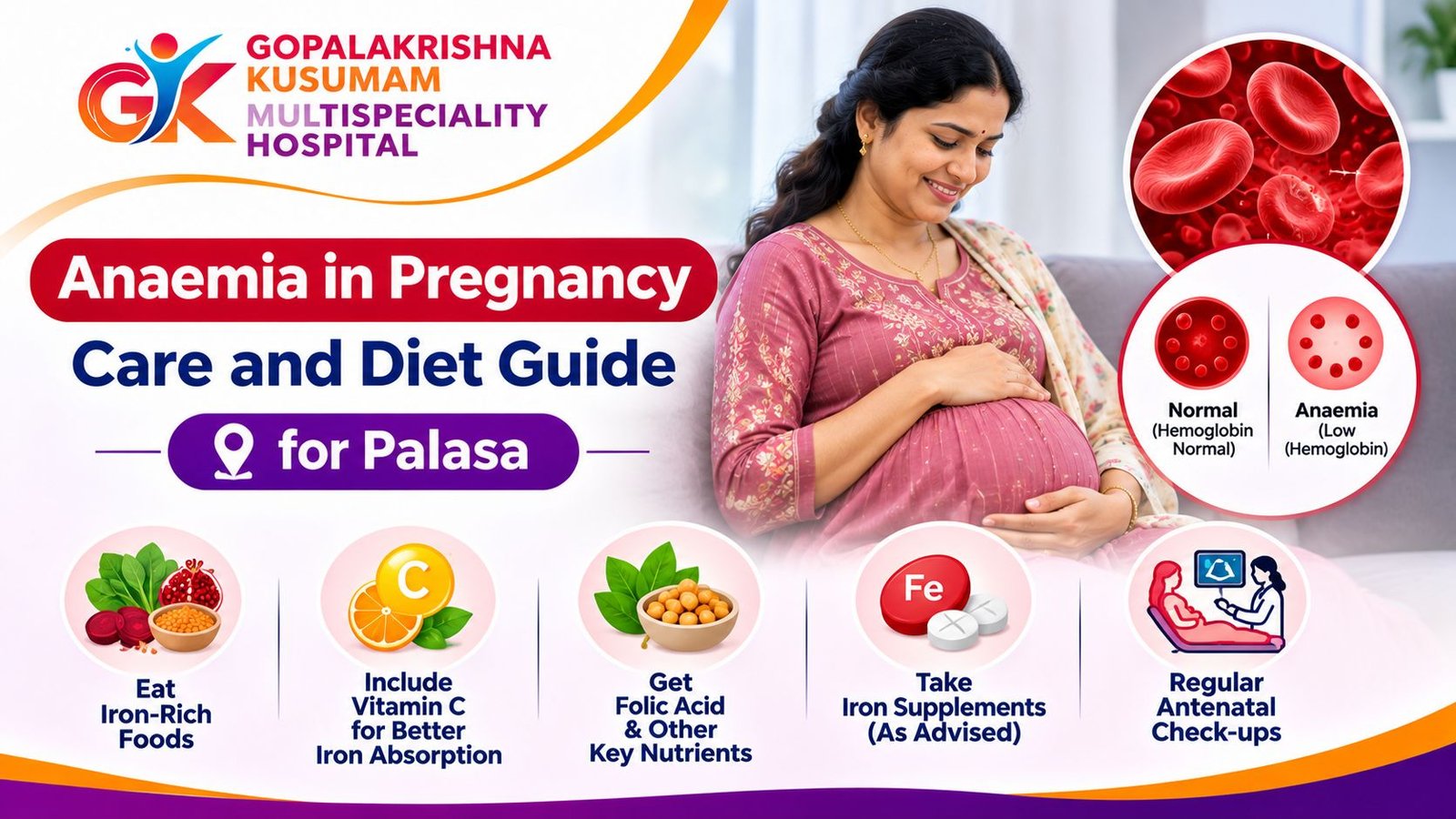
Anaemia in Pregnancy Care and Diet Guide for Palasa
Anaemia in pregnancy: signs, tests, diet and care
Quick answer: Anaemia in pregnancy means your blood has too little haemoglobin to carry enough oxygen for you and your baby. It is very common in India and often causes tiredness, weakness, breathlessness, dizziness or pale skin, though many women notice nothing at all. A simple blood test at your antenatal visits can detect it, and it is usually managed with iron and folic acid tablets, an iron-rich diet and regular check-ups, with further treatment if your doctor feels it is needed.
For many expectant mothers in Palasa, Kasibugga and the villages around Srikakulam, feeling tired during pregnancy is accepted as normal. Some tiredness is expected. But extreme weakness, getting breathless while climbing a few steps, or a racing heartbeat can be signs of anaemia, a condition that is both very common and very treatable.
Anaemia matters because a mother's blood supplies oxygen and nutrients to the growing baby. Treating it early helps mothers feel better, cope with childbirth more safely and recover well afterwards. This guide explains what anaemia in pregnancy is, why it happens, how it is checked and what you can do at home and with your doctor's help. It is general information only; please follow the advice of your own doctor or obstetrician.
What is anaemia in pregnancy?
Haemoglobin is the protein in red blood cells that carries oxygen around the body. During pregnancy the volume of blood in your body increases a lot to support the baby and the placenta, and your body needs extra iron, folic acid and vitamin B12 to make more red blood cells. If these needs are not met, haemoglobin falls and anaemia develops.
In pregnancy, a haemoglobin level below 11 g/dL is generally considered anaemia. Your doctor will interpret your report based on your stage of pregnancy and overall health.
The World Health Organization notes that anaemia is a serious global public health problem that particularly affects young children, menstruating adolescent girls and women, and pregnant and postpartum women (WHO: Anaemia fact sheet). In India, the National Family Health Survey (NFHS-5, 2019-21) found that 52.2 percent of pregnant women aged 15 to 49 were anaemic, and only 26 percent of mothers reported taking iron and folic acid tablets for 180 days or more during pregnancy (NFHS-5 India Fact Sheet). In other words, anaemia affects about half of expectant mothers, and many do not complete the full course of tablets.
What causes anaemia during pregnancy?
- Iron deficiency: the most common cause. Many women start pregnancy with low iron stores because of heavy periods, a diet low in iron, or closely spaced pregnancies.
- Folic acid deficiency: folic acid is needed to make new cells and to protect the baby's developing brain and spine.
- Vitamin B12 deficiency: more likely in women who eat little or no milk, curd, eggs, fish or meat.
- Worm infections: intestinal worms can cause blood loss and poor absorption of iron, particularly where people walk barefoot.
- Inherited blood conditions: such as thalassaemia trait or sickle cell disease, which need specific advice.
- Other factors: repeated vomiting in early pregnancy, twin pregnancy, malaria, and some long-term illnesses.
Because the causes differ, the right treatment also differs. That is why it is important not to self-treat but to get your blood tested.
Signs and symptoms to watch for
Mild anaemia may cause no symptoms. As it becomes more severe, you may notice:
- Unusual tiredness or weakness that does not improve with rest.
- Breathlessness on light activity, such as climbing stairs or walking to the market.
- A fast or pounding heartbeat.
- Dizziness or feeling faint, especially on standing up.
- Pale skin, pale inner eyelids, lips or nails.
- Headaches and difficulty concentrating.
- Cold hands and feet.
- Cravings to eat non-food items such as mud, chalk, ice or raw rice (called pica).
- Swelling of the feet along with breathlessness in more severe cases.
Many of these symptoms can overlap with normal pregnancy changes, so mention them to your doctor rather than assuming they are nothing.
How is anaemia detected?
Anaemia is usually picked up through routine blood tests during antenatal care. At your first visit, your doctor will normally ask for a complete blood count (CBC) that includes haemoglobin. This is typically repeated later in pregnancy, and more often if you are anaemic or at higher risk.
If your haemoglobin is low, your doctor may order further tests to find the cause, such as tests for iron stores (ferritin), red cell size, vitamin B12 or folate, a stool test for worms, or a test for thalassaemia or sickle cell. Do keep all your reports together in your antenatal file and bring them to every visit.
Why treating anaemia matters
Anaemia that is left untreated can affect both mother and baby. It can leave the mother exhausted and less able to fight infections, and makes it harder to cope with blood loss during and after delivery. Severe anaemia in pregnancy has been linked with a higher chance of the baby being born early or with low birth weight. The good news is that most anaemia can be prevented or corrected with timely care.
Treatment and the role of IFA tablets
Iron and folic acid (IFA) tablets
Under India's Anemia Mukt Bharat programme, pregnant women are advised to take one iron and folic acid tablet daily from the second trimester, continuing for at least 180 days, and a similar course after delivery. Women who are found to be anaemic may be advised a higher dose. These tablets are provided free at government health facilities and through ASHA and ANM workers. Your doctor may prescribe a particular formulation or dose based on your test results; follow their advice.
Tips to make iron tablets work better and easier to take:
- Take the tablet with water, lemon water or a vitamin C rich fruit such as amla, guava or orange, which helps absorption.
- Do not take it with tea, coffee or milk; keep a gap of at least an hour or two.
- Keep calcium tablets and iron tablets apart, as calcium can reduce iron absorption. Ask your doctor about the right timing.
- If the tablet upsets your stomach, try taking it after a meal or at bedtime, and tell your doctor rather than stopping it.
- Black-coloured stools are common with iron tablets and are usually harmless; constipation can be eased with water, fibre and fruits.
Other treatments
If anaemia is moderate to severe, or does not improve with tablets, your doctor may suggest iron given through a vein (an IV infusion) in a hospital setting. Very severe anaemia, especially near delivery, may need a blood transfusion. Deworming medicine may be advised after the first trimester if worms are suspected. These decisions should always be made by a qualified doctor.
Iron-rich foods for expectant mothers
Food alone may not correct anaemia during pregnancy, but a good diet helps prevent it and supports your treatment. Try to include:
- Green leafy vegetables: palakura (spinach), thotakura (amaranth), gongura, munagaku (drumstick leaves) and methi.
- Pulses and legumes: dals, chana, rajma, horse gram (ulavalu) and sprouts.
- Millets: ragi and bajra, which also give calcium and fibre.
- Jaggery and groundnuts: for example a small piece of chikki or a groundnut laddu as a snack, in moderation if you have high blood sugar.
- Dates, raisins and sesame seeds.
- Eggs, fish, chicken and meat for those who eat them; iron from these sources is easier for the body to absorb.
- Vitamin C rich fruits such as guava, amla, oranges and lemon to improve absorption from plant foods.
Cooking in iron utensils, such as a cast-iron kadai, may add a little iron to food. Avoid drinking tea or coffee straight after meals.
Prevention: start before and early in pregnancy
- If you are planning a pregnancy, see a doctor beforehand. Start folic acid as advised, check your haemoglobin and treat anaemia before conceiving.
- Register your pregnancy early and attend all antenatal visits.
- Take IFA tablets for the full advised period, not just until you feel better.
- Space pregnancies; talk to your doctor about family planning after delivery.
- Wear footwear outdoors and wash hands before eating to reduce worm infections.
- Seek treatment for heavy periods between pregnancies.
When should you see a doctor urgently?
Contact your doctor or go to hospital immediately, or call 108, if you have:
- Severe breathlessness, chest pain or a pounding heartbeat at rest.
- Fainting or feeling like you might faint.
- Any vaginal bleeding during pregnancy.
- Reduced baby movements.
- Severe headache, blurred vision or sudden swelling of the face and hands.
At Gopala Krishna Kusuma Multispeciality Hospital's OBG and gynaecology department in Kasibugga, our team provides antenatal check-ups, guidance on nutrition and supplements, and care through pregnancy and delivery. For a broader overview of pregnancy care, read our complete guide to safe motherhood and maternity care. You can book an antenatal appointment online.
Frequently asked questions
What haemoglobin level is considered anaemia in pregnancy?
In pregnancy, a haemoglobin level below 11 g/dL is generally considered anaemia. Doctors further classify it as mild, moderate or severe. Your doctor will interpret your report according to your stage of pregnancy and explain what treatment you need.
When should I start iron tablets in pregnancy?
Under India's Anemia Mukt Bharat guidelines, iron and folic acid tablets are generally started from the second trimester and continued for at least 180 days, with folic acid advised from before conception and in early pregnancy. Your doctor may change the timing or dose based on your blood test results.
Can I take iron tablets with milk or tea?
It is better not to. Tea, coffee, milk and calcium tablets can reduce iron absorption. Take iron tablets with water or a vitamin C rich drink such as lemon water, and keep a gap of an hour or two from tea, coffee and calcium.
Is anaemia in pregnancy dangerous for my baby?
Mild anaemia that is treated usually causes no lasting harm. Severe or untreated anaemia has been linked with problems such as premature birth and low birth weight, and it makes the mother less able to cope with blood loss at delivery. Regular check-ups and treatment greatly reduce these risks.
Can diet alone cure anaemia in pregnancy?
An iron-rich diet helps, but during pregnancy the body's iron needs are so high that diet alone is often not enough to correct anaemia. Most women also need IFA tablets, and some need further treatment. Follow your doctor's advice and keep taking your tablets.
Why are my stools black after taking iron tablets?
Dark or black stools are a common, usually harmless effect of iron tablets. However, if you have black, sticky stools with stomach pain, vomiting or dizziness, contact your doctor promptly.
Contact the hospital
For an obstetrics and gynaecology consultation at Gopala Krishna Kusuma Multispeciality Hospital, 3B, 5c 431/3A, Jayaramachandrapuram road, Kasibugga, Padmanabhapuram colony, Shivaji Nagar, Palasa, Andhra Pradesh 532222, call +91 79008 08790, or visit our contact page for directions and other ways to reach us. In an emergency, call 108 or 112.
Hours: OPD Monday to Saturday, 9 AM to 9 PM; emergency services 24 hours.
Disclaimer: This article is for general information only and is not a substitute for professional medical advice, diagnosis or treatment. Please consult a qualified doctor about your own health.
Image credit: P1898, via Wikimedia Commons, CC BY 4.0; cropped and resized. Representative stock image; it does not show the hospital's patients, staff or premises.